


EpiBio Research Day 2026

We are excited to announce that abstract submission is now open for the EpiBio Research Day 2026.
The event will take place on April 10, 2026, in PHFM 1150, starting at 9:00 a.m.
EpiBio Research Day 2026 is open to undergraduate students, graduate students, PhD students, and faculty members. It will be a great opportunity to learn from experts in the Epidemiology and Biostatistics field and to connect with faculty and peers. There is no fee to attend or present, and lunch and refreshments will be provided.
We are currently accepting abstract submissions (maximum 300 words) from students who are conducting or have recently completed research related to Epidemiology and Biostatistics. Whether your work is clinical, academic, or community-based, we would love to see what you have been working on.
The submission deadline has been extended to 11:59 p.m. on Friday, March 13, 2026.
Submit your attendance or presentation here: EpiBio Research Day 2026 Attendance and Presentations.
If you have any questions, please feel free to contact Ha Ai Vi Vo or Ruiming Han. We look forward to seeing you on April 10 for a day dedicated to connection, discovery, and the celebration of student research.
Keynote Address
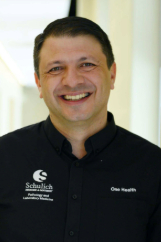 Dr. Francisco Olea-Popelka
Dr. Francisco Olea-Popelka is the Beryl Ivey Endowed Chair in One Health. His research program focuses on evaluating factors impacting health at the intersection of humans, wildlife, and domestic species in different environments, globally. A key component of his research philosophy is to use an applied, integrated, inter-disciplinary approach in which environmental, socio-economical, cultural, and political factors are considered when addressing different health challenges. Dr. Olea-Popelka work in close partnership with government officials, clinicians (physicians and veterinarians), microbiologists, molecular biologists, nurses, nutritionists, social workers, wildlife biologists, patients, and policy and decision makers, among others.
Integrating Epidemiological Methods Within a One Health Approach to Address Health Challenges at the Human–Animal–Environment Interface
In this keynote lecture, Dr. Olea Popelka will present examples of epidemiologic methods and tools used - and their importance - when working with academic and non-academic stakeholders (i.e. Governments agencies, NGO’s, Private corporations, global health organizations, National parks, Media sources, and Affected communities) on a variety of research projects, activities, and initiatives to address health challenges at the livestock–wildlife–environment–human interface, using a One Health approach.
Opening and Closing Remarks
Dr. Saverio Stranges 
Dr. Saverio Stranges is currently Professor and Chair of the Department of Epidemiology and Biostatistics within the Schulich School of Medicine & Dentistry, Western University in Canada.
Dr. Stranges is a medical doctor, public health specialist and chronic disease epidemiologist, with extensive experience in the field of epidemiology and public health research. His research focuses on Global Health as well as on the epidemiology and prevention of chronic disease and aging across the life-course, specifically regarding the role of lifestyles, behavioral and psychosocial factors, such as dietary patterns, sleep behaviors and social determinants of health. Throughout his career, Dr. Stranges has been involved in several international epidemiological projects, clinical trials, secondary data analyses and systematic review work, and has published extensively in epidemiology and public health research, with over 300 publications as scientific articles, reviews and book chapters.
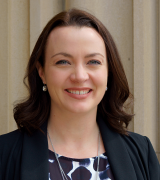 Dr. Kelly Anderson
Dr. Kell Anderson is an Associate Professor of Epidemiology and Biostatistics and Psychiatry at the Schulich School of Medicine & Dentistry and an adjunct scientist at the Institute for Clinical Evaluative Sciences. She is also a Canada Research Chair in Public Mental Health Research, and is one of few researchers in the world using population-based health administrative data to study first onset psychosis. She is a research leader on both the epidemiology of psychotic disorders, as well as health services research on early psychosis intervention. She is particularly skilled at identifying crucial questions of high clinical and public health relevance.
Schedule
| 9:00 | Door Open | PHFM 1150 |
| 9:30-10:00 | Sign-up and Breakfast | PHFM 1150 |
| 10:00-10:10 | Opening Remarks | PHFM 1150 |
| 10:10-10:40 | Keynote Presentation | PHFM 1150 |
| 10:40-12:40 | Concurrent Oral Presentation | PHFM 1120/3014/3015 |
| 12:40-1:30 | Lunch | PHFM 1150 |
| 1:30-3:30 | Poster Presentations (Voting stops at 3:00) | PHFM 1150 |
| 3:30-3:40 | Award Ceremony | PHFM 1150 |
| 3:40-4:00 | Closing Remarks | PHFM 1150 |