


Dr. Rishi Ganesan
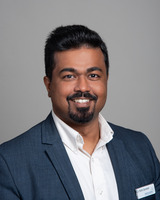 Paediatric Critical Care
Phone: 519.685.8500 ext. 58052
Full Name:
Dr. Rishi Ganesan is a pediatric neurocritical care physician and clinician-scientist whose pioneering work is transforming the understanding and management of brain injury and ICU delirium in critically ill children. He holds faculty appointments in the Departments of Paediatrics and Clinical Neurological Sciences at the Schulich School of Medicine & Dentistry, Western University, with cross-appointments in Epidemiology & Biostatistics and Physiology & Pharmacology. He also serves as a Scientist at the LHSC Research Institute and is a core member of the Western Institute for Neurosciences.
Dr. Ganesan’s research program focuses on improving neurological outcomes in critically ill children, particularly those with acquired brain injuries. His work integrates advanced neuromonitoring techniques—including high-density EEG, functional near-infrared spectroscopy (fNIRS), and functional MRI—to improve our understanding of PICU delirium, and to detect covert consciousness and guide neuroprognostication. His interdisciplinary approach bridges pediatric neurocritical care, computational neuroscience, and functional neuroimaging.
His academic journey began in India, where he graduated as the best outgoing graduate and valedictorian from JIPMER, Puducherry (medical school) and completed his MD (paediatric residency) and a unique DM (clinical doctorate in paediatric critical care) at PGIMER, Chandigarh. He then pursued dual fellowships in pediatric critical care and neurocritical care at The Hospital for Sick Children (SickKids), Toronto. His postdoctoral research at SickKids was supported by prestigious fellowships from RESTRACOMP and the Centre for Brain & Mental Health.
Dr. Ganesan has received over $1 million in competitive research funding as principal or co-principal investigator, including grants from CIHR, Brain Canada, and AMOSO. His current projects include the ABOVE Trial (inhaled sedation in critically ill children), the NuANCEd study (quantitative EEG based neuromonitoring by bedside nurses), the TraNSIEnCe study (functional brain connectivity in PICU delirium), and the POPCORN initiative (a CIHR-funded national child health research platform for pandemic preparedness). Dr. Ganesan also leads the PREDICT-ABI project, a novel study on covert consciousness, supported by the AMOSO Innovation Fund, which uses multimodal neuroimaging to detect cognitive motor dissociation in comatose children.
A prolific academic, Dr. Ganesan has authored over 50 peer-reviewed publications and contributed to several textbooks. He is a Fellow of the American Clinical Neurophysiology Society and serves on multiple national and international professional organizations, including the Canadian Pediatric Intensive Care Consortium (CanPICC), the Canadian Critical Care Trials Group (CCCTG), the Neurocritical Care Society, the Pediatric Neurocritical Care Research Group and the Curing Coma Campaign. Dr. Ganesan is also a dedicated educator and mentor, supervising graduate students, medical students, residents and clinical fellows.
With a rare combination of clinical expertise, research innovation, and compassionate care, Dr. Rishi Ganesan is redefining the frontiers of pediatric brain injury management. His work not only advances scientific understanding but also brings tangible improvements to the lives of children and families navigating the most challenging moments of critical illness.
Dr. Ganesan’s research program focuses on improving neurological outcomes in critically ill children, particularly those with acquired brain injuries. His work integrates advanced neuromonitoring techniques—including high-density EEG, functional near-infrared spectroscopy (fNIRS), and functional MRI—to improve our understanding of PICU delirium, and to detect covert consciousness and guide neuroprognostication. His interdisciplinary approach bridges pediatric neurocritical care, computational neuroscience, and functional neuroimaging.
His academic journey began in India, where he graduated as the best outgoing graduate and valedictorian from JIPMER, Puducherry (medical school) and completed his MD (paediatric residency) and a unique DM (clinical doctorate in paediatric critical care) at PGIMER, Chandigarh. He then pursued dual fellowships in pediatric critical care and neurocritical care at The Hospital for Sick Children (SickKids), Toronto. His postdoctoral research at SickKids was supported by prestigious fellowships from RESTRACOMP and the Centre for Brain & Mental Health.
Dr. Ganesan has received over $1 million in competitive research funding as principal or co-principal investigator, including grants from CIHR, Brain Canada, and AMOSO. His current projects include the ABOVE Trial (inhaled sedation in critically ill children), the NuANCEd study (quantitative EEG based neuromonitoring by bedside nurses), the TraNSIEnCe study (functional brain connectivity in PICU delirium), and the POPCORN initiative (a CIHR-funded national child health research platform for pandemic preparedness). Dr. Ganesan also leads the PREDICT-ABI project, a novel study on covert consciousness, supported by the AMOSO Innovation Fund, which uses multimodal neuroimaging to detect cognitive motor dissociation in comatose children.
A prolific academic, Dr. Ganesan has authored over 50 peer-reviewed publications and contributed to several textbooks. He is a Fellow of the American Clinical Neurophysiology Society and serves on multiple national and international professional organizations, including the Canadian Pediatric Intensive Care Consortium (CanPICC), the Canadian Critical Care Trials Group (CCCTG), the Neurocritical Care Society, the Pediatric Neurocritical Care Research Group and the Curing Coma Campaign. Dr. Ganesan is also a dedicated educator and mentor, supervising graduate students, medical students, residents and clinical fellows.
With a rare combination of clinical expertise, research innovation, and compassionate care, Dr. Rishi Ganesan is redefining the frontiers of pediatric brain injury management. His work not only advances scientific understanding but also brings tangible improvements to the lives of children and families navigating the most challenging moments of critical illness.


