


Our Founder: Dr. Prafulchandra Chandarana
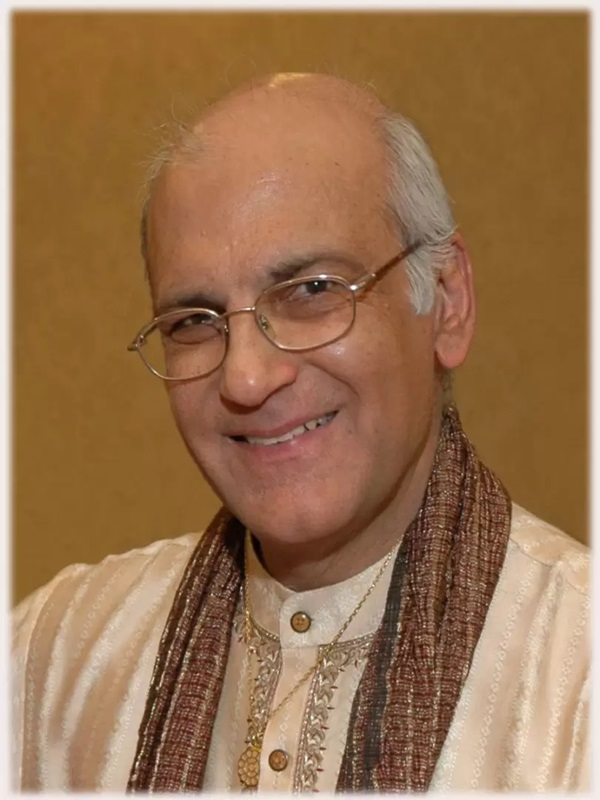
“True education is about getting the best out of oneself.”
- Mahatma Gandhi.
Dr. Praful Chandarana was many things before he founded this course in the early 1990’s: a father, a husband, a friend (to many), a physician, and many more roles. I met him first as a somewhat jaded “senior” medical student, nearing the end of my clerkship year and thus quite certain that I had seen if not all, then at least most of it. My psychiatry rotation was my last, but this did not concern me, as I was already clear on my future as either a neurologist or medical geneticist, depending on how electives went.
In a tale as old as time, the next six weeks blew apart all my overly confident plans and beliefs. I saw a depth of suffering and also triumph over unimaginable barriers that I could previously not have imagined. I saw some of the darkest and brightest corners of our current health care system. Much of this life changing 42 days was guided by a very gentle, soft spoken man who looked like one of my uncles but seemed to hold all the knowledge in the world. Philosophical discussions about the history of thought were as likely to occur in our tutorials as any discussion of treatment or diagnosis. indeed, he made it clear that learning the basics of the latter was only my first responsibility. Much more crucial would be my ability to empathize, connect, and care for people who would sometimes have good reason to doubt my intentions.
With this in mind, it is not surprising that he developed a laser focus on teaching the more “process” oriented skills of being a good psychiatrist, rather than the “content”. He celebrated the unique ways that the doctor and patient could find each other across a “diagnostic interview”, and how that could forge a working relationship that stood the the test of time and crisis. Long before I showed up, Dr. Chandarana was known to his colleagues and residents as a consummate teacher of clinical skills, especially communication based skills. But, his prioritization of empathy and thoughtfulness as a part of the process was always there. He studied the impact on knowledge and empathy by preparing high quality education materials for high school students about HIV at the height of the AIDS crisis. He focused on how issues such as obesity shape our behaviour as clinicians, and how trauma changes eating patterns in people.
Even as medical education moved towards a more standardized approach to interviewing patients, Dr. Chandarana always worked to re-centre the personal and empathetic aspect. Perhaps not surprisingly then, as OSCE’s became more and more important in preparing and assessing physicians for clinical care, that he would develop his expertise as an OSCE assessor and developer with the plan to eventually create a course that focuses on teaching these skills he valued so greatly.
From the beginning, Dr. Chandarana’s focus was on serving the needs of the trainees to expand their natural and trained skills as far as they could to make them the most empathic, successful clinical interviewer as possible. And the ultimate goal at the end of every course was always to get as many people as possible feeling like they could be the empathic, connected clinician that a patient can feel listened to and validated by. The basic DNA of the course always emphasized the equally important need for “process” vs “content” in being the absolute best clinician that you can be when speaking with a person with needs often more complex than anyone feels ready for at the time.
Over the years, he honed the components and structure of this course until it became a representation of his own approach to both teaching and clinical care: empathy and knowledge working hand in hand. I was deeply honoured to be chosen by Praful to join Mark Watling in continuing to manage this course, this product of decades of work and care that represents a man who lived and taught with his empathy and humanity always engaged as much as his knowledge.
Today, I’m hopeful that Dr. Chandarana would be pleased with how this course continues to reach his fellow psychiatrists, both future and past, and offers them a way to be as much as they possibly can be, using the parts of themselves that they have always had.
~ Dr. Carla Garcia