

Search Website
Microaggressions
What are microaggressions?
Microaggressions are “the brief and commonplace daily verbal, behavioural, and environmental indignities, whether intentional or unintentional, that communicate hostile, derogatory, or negative racial, gender, sexual orientation, and religious slights and insults to the target person or group” (Sue, 2010, p. 229). Many individuals and communities face microaggressions daily. Because microaggressions are common and because they occur in the context of systemic oppression, exposure to them can cause serious harm to people’s health and well-being.
Video by: Laetitia Ibaki (Western B.L.U.E.) and Seidy Rayo (Schulich Medicine & Dentistry, ESA)Microaggressions are subtle yet harmful messages conveyed through comments or actions, often directed at marginalized groups in society, including people of colour, women, 2SLGBTIA+ individuals, those with disabilities, and religious minorities. These acts may invalidate the group identity or the individual's lived experience, humiliate on personal or group levels, imply a lack of belonging, intimidate, or lower one's status and treatment. While they may appear as compliments or jokes, microaggressions contain hidden insults, offensive statements, or insensitive questions. Though not always intentional, they cause harm and offence, with their impact accumulating over time. Microaggressive behaviour can manifest verbally, non-verbally, or within the environment, perpetuating harmful stereotypes and biases (Royal Pharmaceutical Society, 2023).
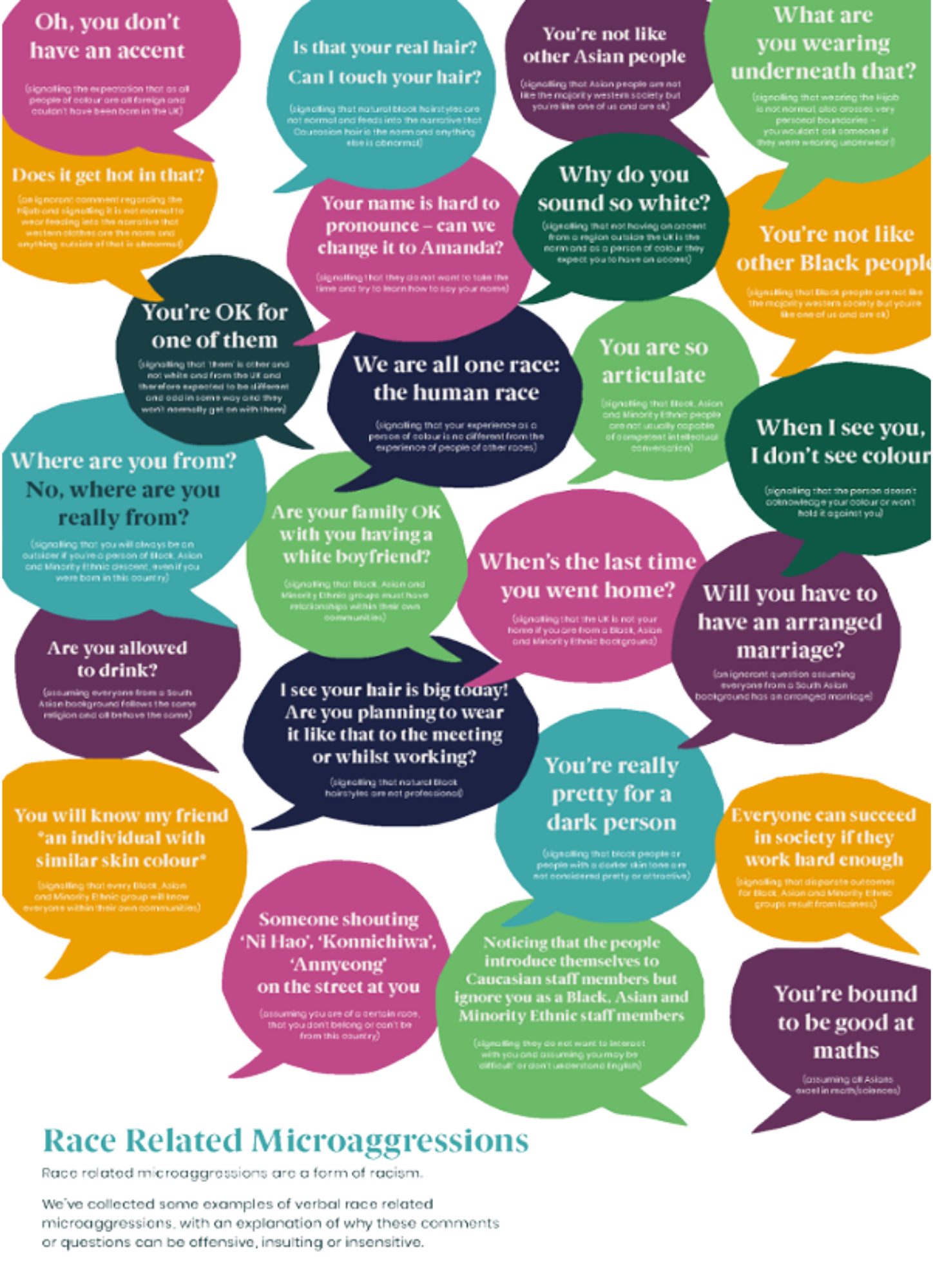
Racial microaggressions are frequent, everyday occurrences involving verbal, behavioural, or environmental actions that convey derogatory, hostile, or negative racial slights and insults toward people of colour, whether these actions are intentional or unintentional. Those who commit microaggressions often do so without realizing they are engaging in such behaviours when interacting with racial or ethnic minorities. Race-related microaggressions are a form of racism. Microaggressions seem to appear in three forms: microassault, microinsult, and microinvalidation (Royal Pharmaceutical Society, 2023).
Here are a few examples of race related microaggressions:
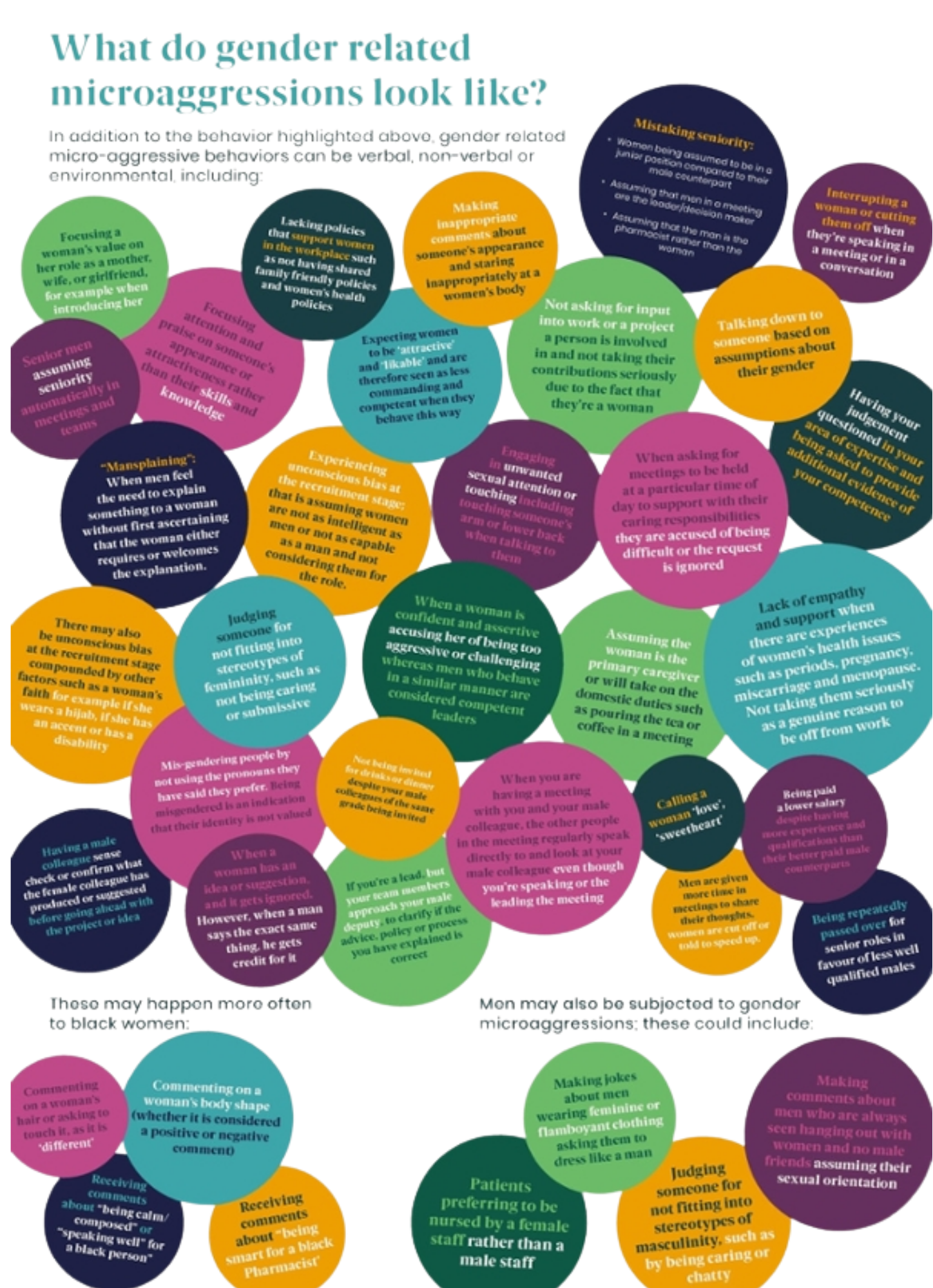
Gender related microaggressions are a form of discrimination against gender minority identity groups. When it comes to gender-related microaggressions, they can contribute to the development of imposter syndrome, a pervasive feeling of inadequacy and constant pressure to validate one's qualifications and knowledge, even when holding a position based solely on merit. Such microaggressions can also lead to the silencing of these groups, causing self-doubt and questioning of their abilities, ultimately eroding their self-worth. These cumulative effects can have a detrimental impact on mental health (Royal Pharmaceutical Society, 2023).
Here are a few examples of gender related microaggressions:
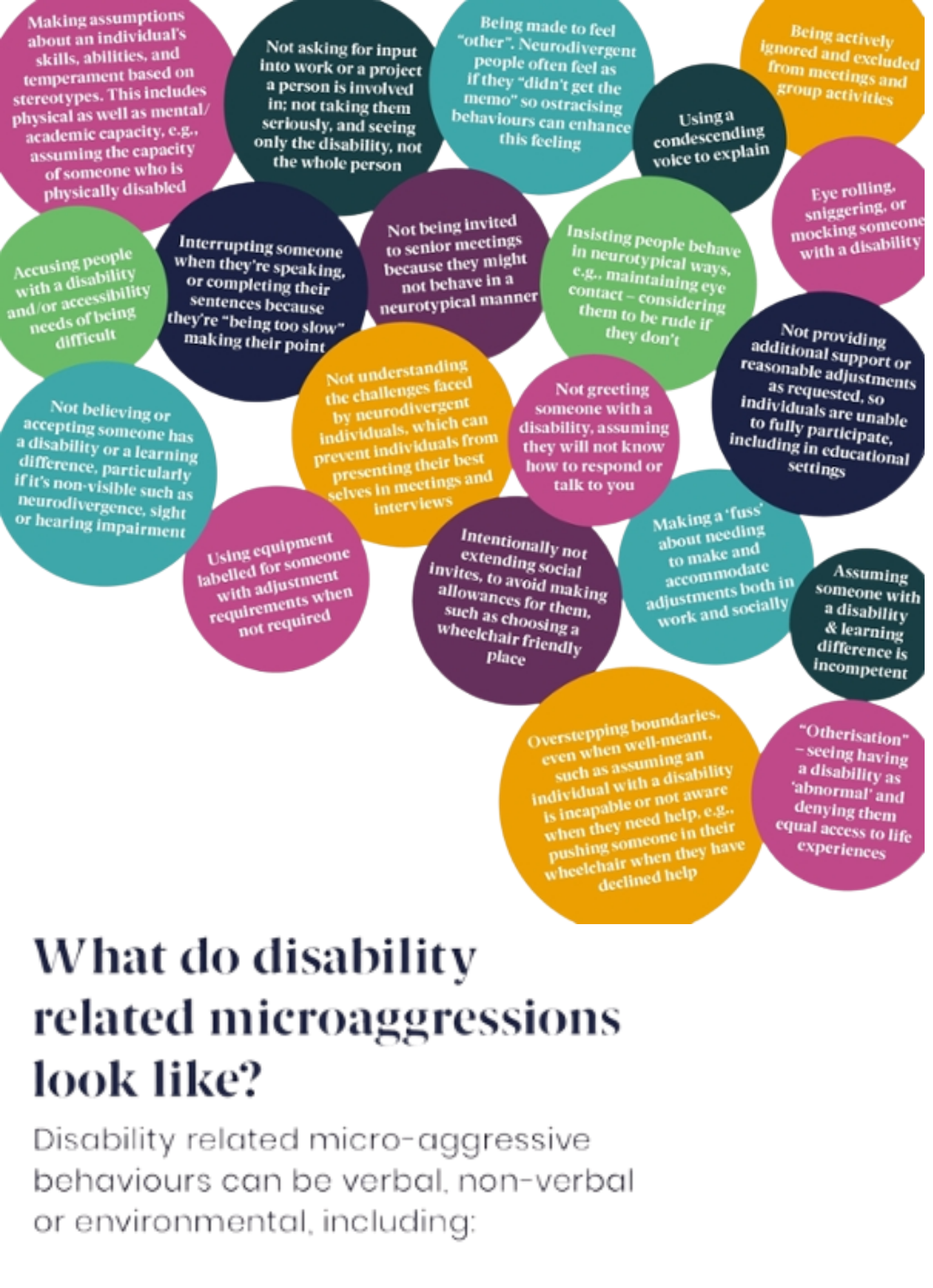
Microaggressions related to disabilities are a display of discrimination and ableism, which is the systemic bias and social prejudice directed at individuals with disabilities or those perceived to have them. Ableism can manifest in various ways, encompassing notions, assumptions, stereotypes, attitudes, practices, physical environmental obstacles, and even broader forms of oppression. Importantly, ableism frequently occurs unintentionally, with many individuals unaware of the repercussions of their words or behaviors. This form of bias undermines and limits the capabilities and potential of people with developmental, emotional, physical, or psychiatric disabilities (Royal Pharmaceutical Society, 2023).
Here are a few examples of disability related microaggressions:
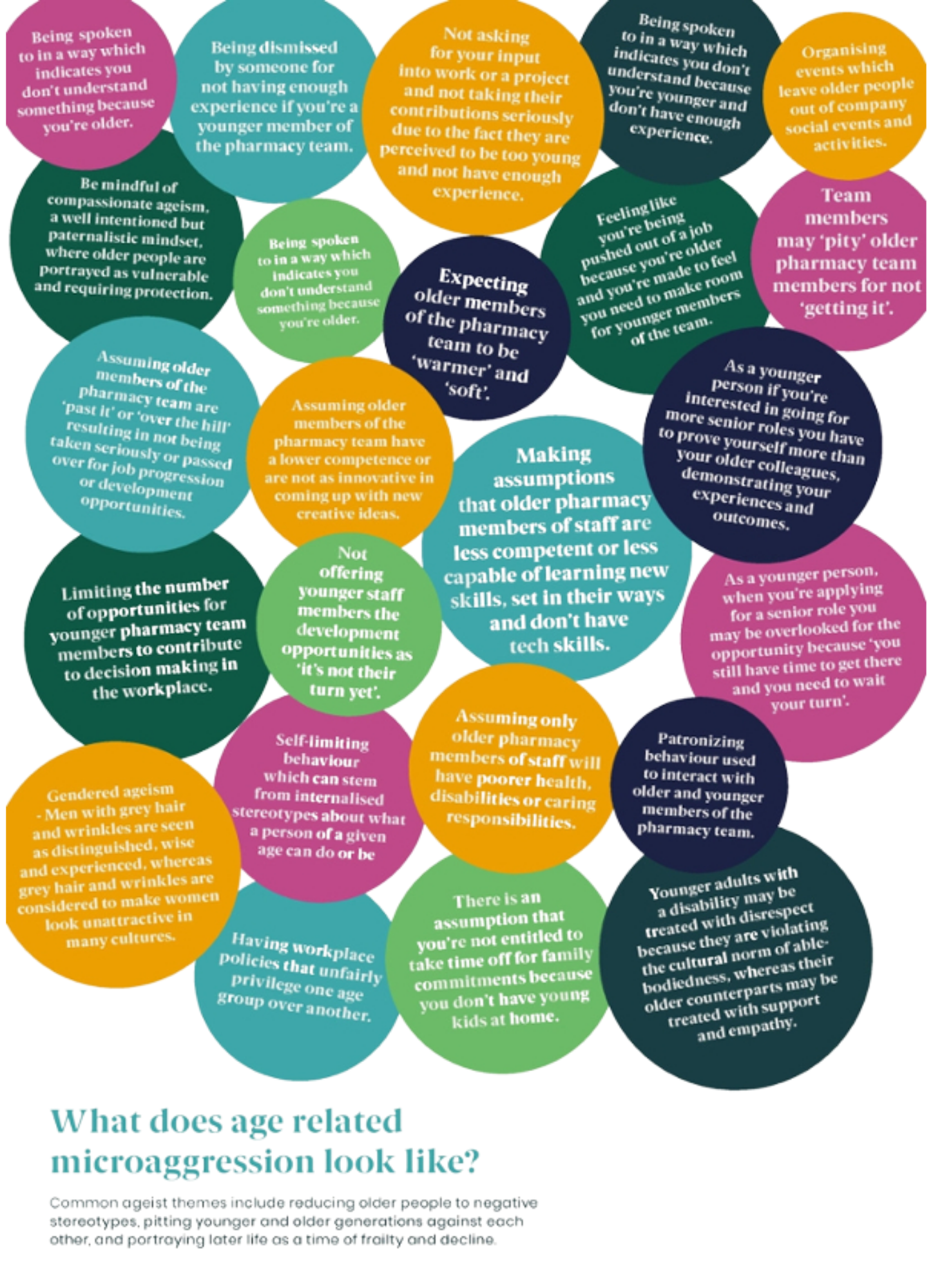
Common ageist themes include reducing older people to negative stereotypes, pitting younger and older generations against each other, and portraying later life as a time of frailty and decline (Royal Pharmaceutical Society, 2023).
Here are a few examples of age related microaggressions:
The Micropedia of Microaggressions
The Importance Of Addressing Microaggressions In Conversations
One key characteristic of microaggressions is that those who commit them may not even be aware of their actions and their underlying biases. This makes it important to address these behaviors to create awareness and understanding. (NPR Life Kit, June 2020)
While intent matters to some extent, what's most important is the impact of the microaggression on the person experiencing it. Even if the person committing the microaggression didn't intend harm, the impact can still be hurtful and harmful. (NPR Life Kit, June 2020)
Marginalized groups should not feel obligated to educate others about their experiences and should prioritize their emotional well-being. They can provide resources or recommend reading materials instead of doing all the educational work themselves. Do your own research and educate yourself about the experiences of marginalized groups. (NPR Life Kit, June 2020)
It's not necessary to belong to a specific group to understand and empathize with their experiences. Being aware of history and the lived experiences of marginalized groups is crucial in these conversations. Addressing a microaggressive comment can involve asking the person to explain what they meant, giving them an opportunity to reconsider their words, and fostering understanding. (NPR Life Kit, June 2020)
Consider whether the person you're talking to is open to productive dialogue and whether the conversation is worth pursuing. Set realistic expectations for these conversations and consider their overall effectiveness. Be mindful of your mental health and well-being when engaging in these discussions. (NPR Life Kit, June 2020)
Expand Your Understanding Through Western EDI’s Comprehensive Module:
Sue, D. W., Capodilupo, C. M., Torino, G. C., Bucceri, J. M., Holder, A. M. B., Nadal, K. L., & Esquilin, M. (2007). Racial microaggressions in everyday life: Implications for clinical practice. American Psychologist, 62(4), 271–286. https://doi.org/10.1037/0003-066X.62.4.271
Psychology Today. (2010, November 17). Microaggressions: More Than Just Race. Psychology Today. Retrieved from https://www.psychologytoday.com/gb/blog/microaggressions-in-everyday-life/201011/microaggressions-more-just-race
Royal Pharmaceutical Society. (2023). Microaggressions. Royal Pharmaceutical Society. Retrieved from https://www.rpharms.com/recognition/inclusion-diversity/microaggressions
Varia, S. (2023, February 14). Addressing microaggressions to deliver cultural competence in pharmacy. The Pharmaceutical Journal. Retrieved from https://pharmaceutical-journal.com/article/ld/addressing-microaggressions-to-deliver-cultural-competence-in-pharmacy
University of Minnesota School of Public Health: Health Equity Work Group. (n.d.). Racial Microaggressions Table – Examples of Racial Microaggressions. University of Minnesota School of Public Health. Retrieved from https://sph.umn.edu/site/docs/hewg/microaggressions.pdf PDF
Nadal, K. L. (2014). A guide to responding to microaggressions. CUNY Forum, 2(1), 71–76. Retrieved from https://ncwwi-dms.org/resourcemenu/resource-library/inclusivity-racial-equity/cultural-responsiveness/1532-a-guide-to-responding-to-microaggressions/file
Limbong, A. (2020, June 9). Microaggressions are a big deal: How to talk them out and when to walk away. NPR Life Kit. Retrieved from https://www.npr.org/2020/06/08/872371063/microaggressions-are-a-big-deal-how-to-talk-them-out-and-when-to-walk-away
The New York Times. (2019, October 31). A Gender Divide on Microaggressions in Medicine. The New York Times. Retrieved from https://www.nytimes.com/2019/10/31/well/live/a-gender-divide-on-microaggressions-in-medicine.html