Resources

This is a list of resources to keep the Schulich School of Medicine & Dentistry community informed. Resources external to Western University are offered as connections and opportunities for learning and sharing knowledge, not explicit endorsement. This is a non-exhaustive list and will be updated regularly.

If you're aware of additional resources that aren't currently included here, please feel free to get in touch with us via email at esa@schulich.uwo.ca.

University Resources

This guide provides context around giving land acknowledgements at Western University, with reflection questions to aid in writing your own oral land acknowledgement.
An online education series for university instructors on the colonial roots of the academy, transforming universities to be more inclusive of Indigenous peoples, and decolonizing pedagogy.
A six-week summer elective program through Schulich Medicine Distributed Education, placing medical students with the Chippewas of Nawash and Saugeen First Nation communities in the Grey-Bruce region.

More Opportunities for Learning

The First Nations principles of ownership, control, access, and possession (OCAP®) assert that First Nations have control over data collection processes, and that they own and control how this information can be used.
A global human rights instrument adopted by the UN General Assembly on September 13, 2007 as the minimum standards for the survival, dignity and well-being of the indigenous peoples of the world.
A website that monitors progress on the Truth and Reconciliation Commission's 94 Calls to Action.
Canadian Centre for Diversity and Inclusion (CCDI)

Indigenous Health and Well-Being

Indigenous Health

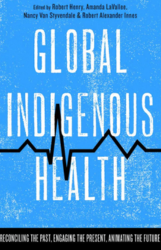
  • Cover of Global Indigenous Health

    Global Indigenous Health: Reconciling the Past, Engaging the Present, Animating the Future

    by Robert Henry, Robert Alexander Innes, Amanda LaVallee, Nancy Van Styvendale

    Global Indigenous Health discusses how Indigenous peoples globally understand health and wellness through traditional knowledge systems. It explores how colonization and colonial policies have dramatically impacted Indigenous peoples' health, disrupting the equilibrium of individual, community, and environmental well-being.
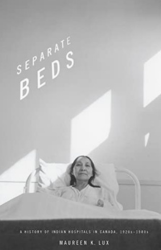
  • Cover of Separate Beds: A History of Indian Hospitals in Canada

    Separate Beds: A History of Indian Hospitals in Canada, 1920s-1980s

    by Maureen K. Lux

    Separate Beds is the shocking story of Canada's system of segregated health care. The "Indian Hospitals" were underfunded, understaffed, overcrowded, and rife with coercion and medical experimentation.

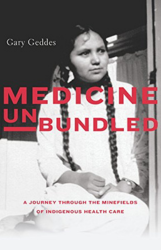
  • Cover of Medicine Unbundled: A Journey through the Minefields of Indigenous Health Care

    Medicine Unbundled: A Journey through the Minefields of Indigenous Health Care

    by Gary Geddes

    Medicine Unbundled follows Gary Geddes across Canada as he interviews Indigenous elders about their experiences in segregated "Indian hospitals" that existed coast to coast for over half a century.

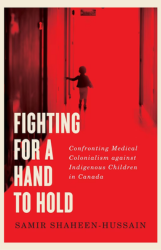
  • Cover of Fighting for a Hand to Hold: Confronting Medical Colonialism against Indigenous Children in Canada

    Fighting for a Hand to Hold: Confronting Medical Colonialism against Indigenous Children in Canada

    by Samir Shaheen-Hussain, Cindy Blackstock, et al.

    Launched in 2018, the #aHand2Hold campaign confronted Quebec's practice of separating Indigenous children from their families during medical evacuation airlifts, disproportionately affecting remote and northern communities.

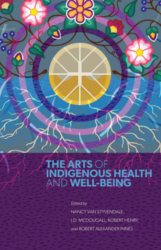
  • Cover of The Arts of Indigenous Health and Well-Being

    The Arts of Indigenous Health and Well-Being

    by Nancy Van Styvendale

    The Arts of Indigenous Health and Well-Being demonstrates the healing possibilities of Indigenous works of art, literature, film, and music, exploring the power of art as an entryway to a healthy and good life.

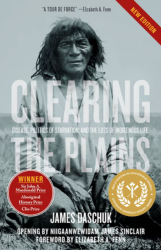
  • Cover of Clearing the Plains: Disease, Politics of Starvation, and the Loss of Indigenous Life

    Clearing the Plains: Disease, Politics of Starvation, and the Loss of Indigenous Life

    by James Daschuk Ph.D, Elizabeth A. Fenn, et al.

    The award-winning Clearing the Plains reveals how Canada's first Prime Minister used a policy of starvation against Indigenous people to clear the way for settlement, sparking widespread debate about genocide in Canada.

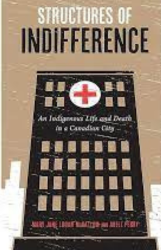
  • Cover of Structures of Indifference: An Indigenous Life and Death in a Canadian City

    Structures of Indifference: An Indigenous Life and Death in a Canadian City

    by Adele Perry and Mary Jane Logan McCallum

    Structures of Indifference examines an Indigenous life and death in a Canadian city and what it reveals about the ongoing history of colonialism.

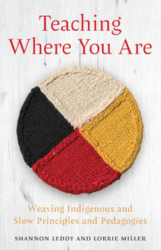
  • Cover of Teaching Where You Are: Weaving Indigenous and Slow Principles and Pedagogies

    Teaching Where You Are: Weaving Indigenous and Slow Principles and Pedagogies

    by Shannon Leddy & Lorrie Miller

    Teaching Where You Are offers a guide for non-Indigenous educators working with Indigenous students, exploring how Indigenous and Slow approaches to teaching and learning mirror and complement one another.

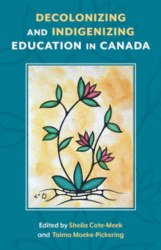
  • Cover of Decolonizing and Indigenizing Education in Canada

    Decolonizing and Indigenizing Education in Canada

    by Sheila Cote-Meek, Taima Moeke-Pickering

    Decolonizing and Indigenizing Education in Canada explores the complexities of decolonization and indigenization in post-secondary institutions, advancing critical scholarship on Indigenous epistemologies, knowledges, curriculum, and pedagogy.

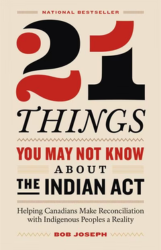
  • Cover of 21 Things You May Not Know About the Indian Act

    21 Things You May Not Know About the Indian Act: Helping Canadians Make Reconciliation with Indigenous Peoples a Reality

    by Bob Joseph

    21 Things You May Not Know About the Indian Act is an essential guide to understanding the Indian Act and its repercussions on generations of Indigenous Peoples, written by a leading cultural sensitivity trainer.

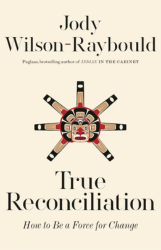
  • Cover of True Reconciliation: How to Be a Force for Change

    True Reconciliation: How to Be a Force for Change

    by Jody Wilson-Raybould

    True Reconciliation answers the question Canadians ask Jody Wilson-Raybould most: what can I do to help advance reconciliation? It provides concrete, tangible steps for those ready to make real change.