Search Website
Training Doctors for a Different Kind of Care

Just three months after his initial consultation with Dr. Andrew Appleton, MD'10, the 60-year-old patient was already seeing outstanding results.
The arthritis pain that had limited his mobility had eased. He'd stopped taking two of his three blood pressure medications. And his mood had shifted from defeated to optimistic.
“He was ecstatic,” recalls Appleton, associate professor in internal medicine.
Before that first visit, the patient's health concerns fit a pattern Appleton often sees as an internist: obesity, hypertension, Type 2 diabetes and arthritis. In conversation with Appleton, he began to understand how the amounts of soda and beer he was drinking were affecting his diabetes and making weight loss more difficult.
“Once he understood how these habits were impacting his health, he became very motivated to change,” says Appleton.
By the patient's follow-up visit, he had lost 20 kilograms. Not long after, his health improved even further.
Appleton has seen many similar stories since becoming a credentialed lifestyle medicine physician in 2023. Now, through the Division of Internal Medicine's new Lifestyle Medicine Residency Curriculum (LMRC), resident physicians at Schulich School of Medicine & Dentistry will also have the opportunity to train in this emerging area of health care.
The program is the first of its kind in Canada.
“Food can and should be used alongside traditional medical management.”
— Dr. Lauren Wong
From treating disease to changing habits
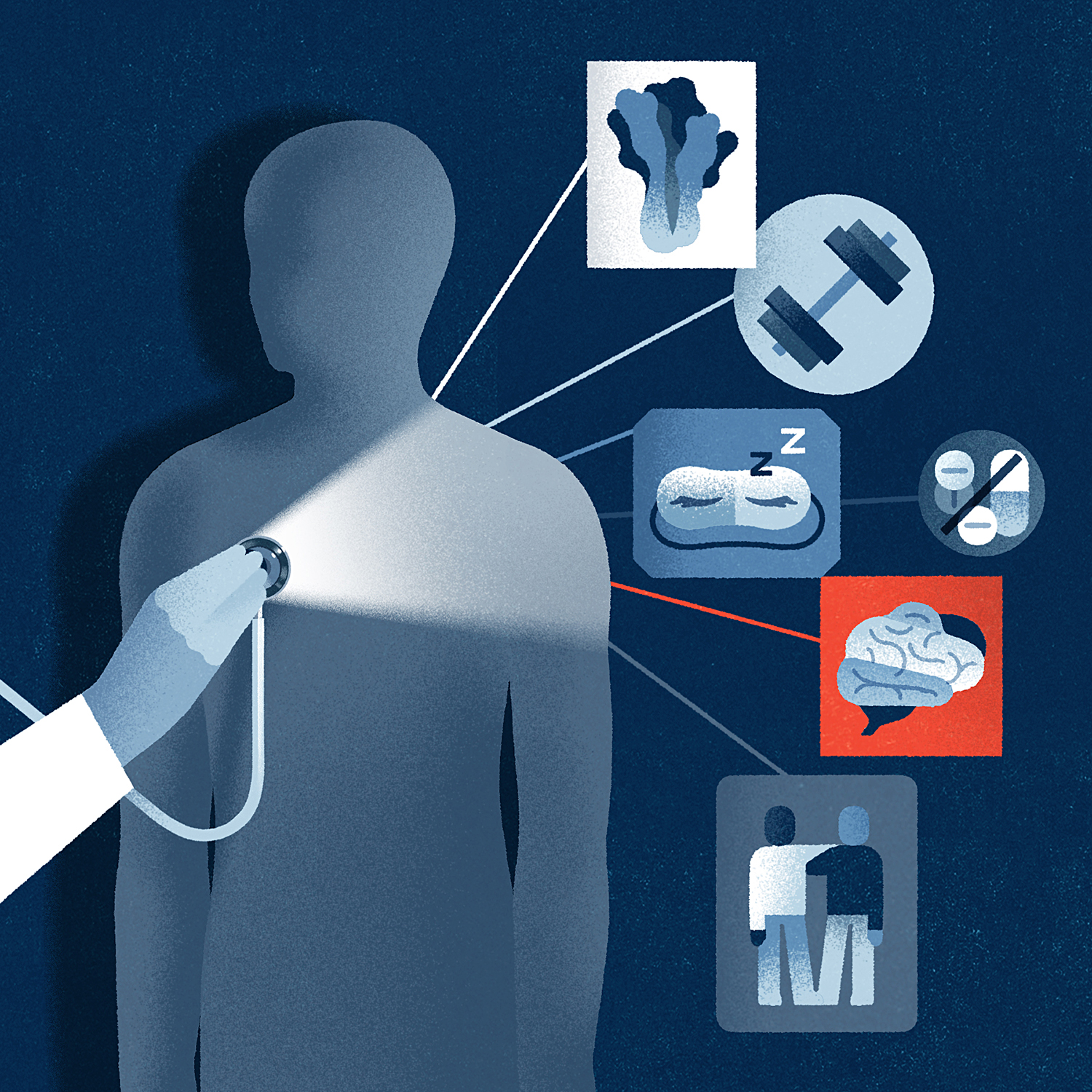
“There's a huge body of evidence that supports optimizing diet, physical activity, sleep, stress and substance use to treat, prevent or even reverse chronic disease,” Appleton says.
The American College of Lifestyle Medicine (ACLM) offers learning modules to help health practitioners apply that evidence in clinical care and support patients in making lasting lifestyle changes. Those modules form part of the LMRC framework.
Lifestyle medicine is not an alternative to standard medical care, notes Appleton. Instead, it is designed to work alongside other evidence-based therapies. That means helping patients identify realistic goals, build sustainable habits and make changes that can improve health long before disease progresses.
A recipe for better care
For internal medicine resident Dr. Lauren Wong, the path to lifestyle medicine started in her family's kitchen.
She grew up baking with her father and sister, developing a love of cooking that followed her to medical school at the University of Alberta. There, she discovered culinary medicine, a field that connects nutrition science, cooking skills and patient care.
The experience eventually led Wong to become the first resident enrolled in the School's LMRC program.
She believes traditional medical education often leaves future physicians without practical tools to help patients change health behaviours.
“We don't learn to specifically counsel people on how to eat better, or even why certain diets like DASH or Mediterranean are effective compared to other diets,” she says.
As a medical student, Wong co-created a culinary medicine elective where participants learned to prepare plant-based recipes and consider how culture, access and lived experience shape dietary advice.
After the course, participants reported relying less on prepared and takeout foods and feeling more confident experimenting in the kitchen. Wong and her collaborators used the survey results as the basis for a research project, which she presented at several medical conferences.
“I met a lot of physicians who would ask me, ‘Can we implement this as a program for physicians or residents?’”
“Lifestyle medicine gives physicians the tools to be more proactive – to prevent chronic disease before it becomes a major problem and overly burdensome for our health-care system.”
— Dr. Andrew Appleton, MD'10
Training the next generation
Lifestyle medicine starts with understanding how people actually live – their habits, routines, challenges and readiness to change.
From there, physicians can offer more specific and practical guidance, including writing lifestyle medicine prescriptions.
“It might be recommending a specific activity at a certain frequency, and then checking back to see how it's going,” Wong explains.
In addition to the ACLM modules, the LMRC program includes individual and group activities, as well as documented patient encounters. Upon completion, residents are eligible to write a board exam and become certified in both internal medicine and lifestyle medicine.
Appleton says the goal is to equip physicians with practical tools to intervene earlier and more effectively in chronic disease.
The Six Pillars of Lifestyle Medicine
Optimal Nutrition
Physical Activity
Restorative Sleep
Stress Management
Social Connection
Avoidance of Risky Substances