Search Website
The Gut Fix
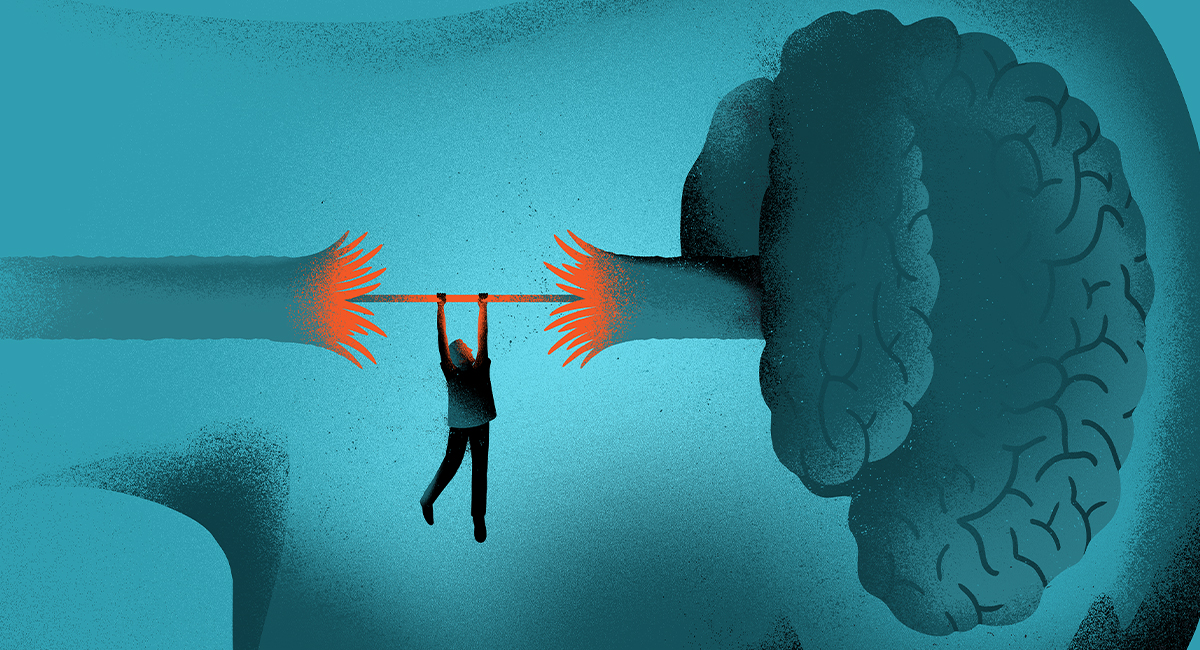
The future of cancer treatment may depend, in part, on what happens in the gut.
“The gut houses 70 to 80 per cent of our immune cells,” says Saman Maleki, PhD, associate professor in pathology and laboratory medicine, oncology and medical biophysics. “And these cells are in constant crosstalk with the microbiome and antigens that enter our body through food and drink.”
Increasingly, researchers believe those interactions may help explain why some patients respond dramatically to immunotherapy while others do not.
Earlier this year, Maleki and colleagues reported results from Phase II clinical trials showing patients with melanoma and lung cancer responded significantly better to immunotherapy when treatment was paired with fecal microbiota transplantation (FMT), a procedure that transfers beneficial gut microbes from a healthy donor to a patient.
Published in Nature Medicine, the studies represent some of the strongest evidence yet that the microbiome may influence how well cancer immunotherapies work.
“The beauty of the microbiome is that we can change it in the gut and generate a systemic immune response that can target tumours anywhere else in the body. That’s remarkable,” says Maleki, a scientist at London Health Sciences Centre Research Institute (LHSCRI).
In the melanoma study, 75 per cent of patients responded to immunotherapy after receiving FMT, compared to historical response rates of 50 to 58 per cent for immunotherapy alone. In patients with non-small cell lung cancer, the response rate reached 80 per cent, compared to historical rates of 39 to 45 per cent.
The work is now moving toward larger, more rigorous clinical trials. This year, a research team led by Maleki is launching the largest Canadian study of FMT and immunotherapy in lung cancer, enrolling 160 patients across the country. Supported by the Canadian Cancer Society and the Weston Family Foundation, the national trial brings together researchers from Western, LHSCRI, Lawson Research Institute at St. Joseph's Health Care London (St. Joseph's), the Canadian Cancer Trials Group, Queen’s University, Princess Margaret Cancer Centre, the University of Toronto and the Ontario Institute for Cancer Research.
“The beauty of the microbiome is that we can change it in the gut and generate a systemic immune response that can target tumours anywhere else in the body.”
— Saman Maleki, PhD'14
From Gut to Tumour
Rather than targeting the tumour directly, FMT seeks to improve the body’s immune response by introducing beneficial microbes from a healthy donor.
Before treatment, patients undergo bowel preparation to reduce their existing microbiome. They then take 35 to 40 capsules, so called “poop pills”, containing microbes from a carefully screened healthy donor. The transplant is administered one week before immunotherapy begins, allowing the new microbiome time to establish itself.
“If you want to get rid of the dandelions in your yard, you first mow the lawn and then overseed with grass seed,” explains Dr. Michael Silverman, professor of medicine and infectious diseases. “The bowel preparation helps clear space for the healthy donor microbes to take root and thrive.”
The donor screening process is rigorous. Potential donors must be between the ages of 18 and 50, free of medications and meet extensive health criteria.
Typically, only one in 43 prospective donors is accepted.
“Your odds of getting accepted as an undergrad at Harvard are higher than your odds of being accepted as a fecal transplant donor,” jokes Silverman.
Two Decades in the Making
The clinical trials build on decades of FMT research in London, Ont. In 2003, Silverman became one of the first physicians in North America to use the procedure to treat recurrent C. difficile infection.
The resulting study attracted international attention and helped establish FMT as a viable treatment for infection.
Over the following two decades, researchers in London continued exploring the microbiome’s role in health and disease. As evidence mounted linking gut microbes to immune function, Maleki began asking whether the same approach could help patients with cancer respond more effectively to immunotherapy.
“Treating cancer this way seemed like a stretch to me, but I felt we needed to try,” says Silverman, medical director of the Infectious Diseases Care Program at St. Joseph's and scientist at Lawson.
The early results quickly changed minds. “It ended up being a home run,” he says.
“Once upon a time, the microbiome was shunned. It’s taken a long time, but now it has come of age.”
— Jeremy Burton, PhD
Meet Your Microbiome
The human body is home to trillions of microorganisms – bacteria, viruses and fungi that collectively make up the microbiome.
While microbiomes exist throughout the body, the largest is found in the gut.
Jeremy Burton, PhD, professor in micriobiology and immunology and the Danone Research Chair in Human Microbiome and Probiotics, compares it to an industrial ecosystem operating largely out of sight.
“It’s like many, many millions of factories producing things we require for everyday needs,” he explains.
These microbes help digest food, produce vitamins, regulate metabolism and communicate with the immune system.
“There are many ways the microbiome is likely involved in health, including the way medications work,” says Burton, who leads the Canadian Centre for Human Microbiome and Probiotic Research at St. Joseph’s.
Scientists believe gut bacteria produce compounds known as metabolites that can enter the bloodstream and influence immune activity throughout the body. Healthy microbes also help maintain the integrity of the gut lining, while disruptions to the microbiome have been linked to a growing range of diseases.
Research has expanded rapidly over the past two decades, revealing connections to conditions ranging from inflammatory bowel disease and diabetes to mental health disorders and cancer.
Burton is exploring ways to give the microbiome a boost through prebiotics, probiotics, postbiotics and fermented foods, including the Canadian Fermented Foods Initiative. In a recent study with the First Episode Mood and Anxiety Program at London Health Sciences Centre, his team found delayed-release apple cider vinegar capsules influenced some of the metabolic side effects associated with medications used to treat mood and anxiety disorders.
“Once upon a time, the microbiome was shunned,” he says. “It’s taken a long time, but now it has come of age.”