Search Website
A Legacy of Service
A Legacy of Service
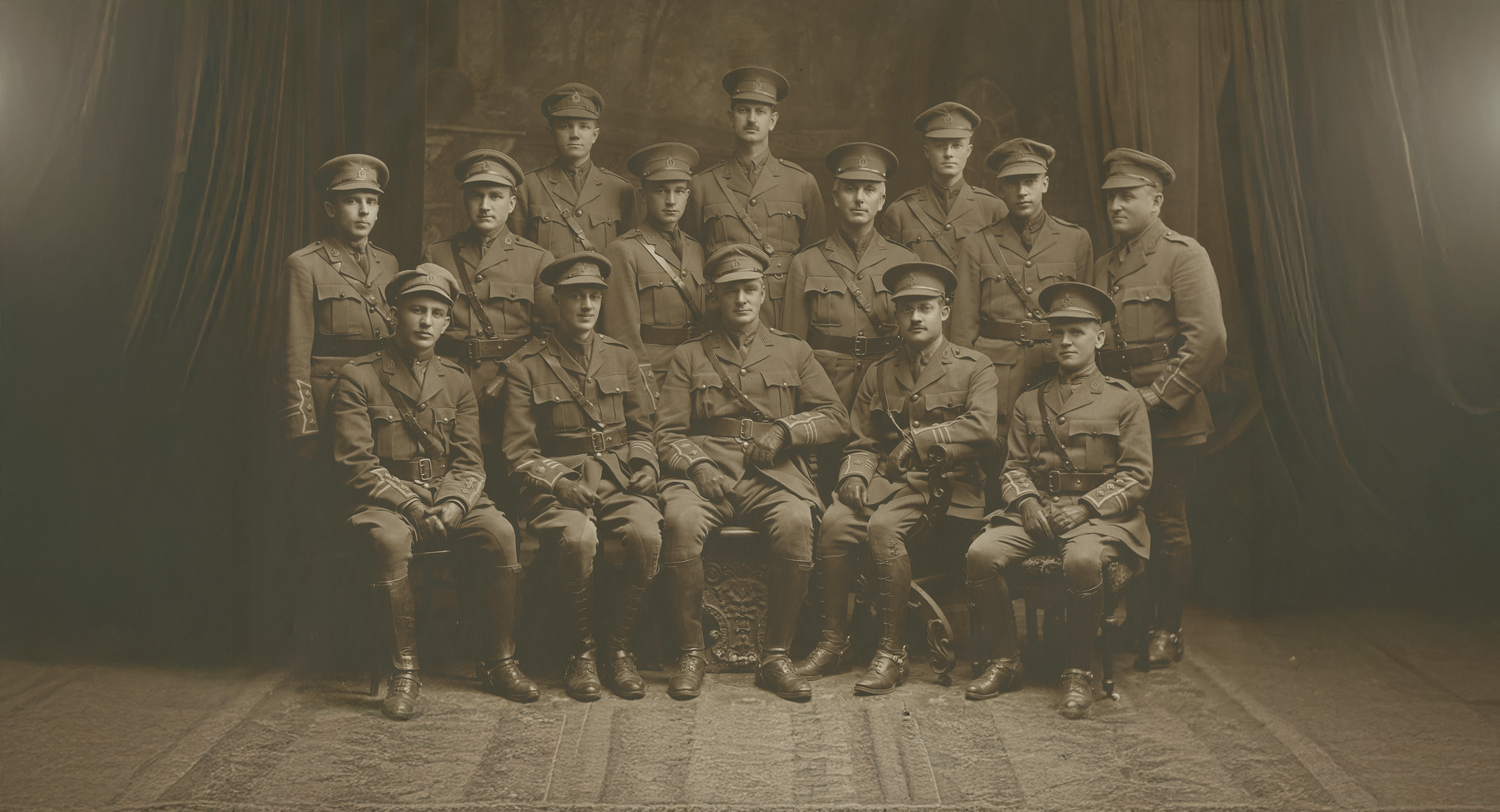
In August 1916, a group of physicians, nurses and medical trainees from Western University sailed to England aboard the H.M. Troopship 2810.
Led by surgeon and anatomy professor Dr. Edwin Seaborn, the No. 10 Canadian Stationary Hospital would spend the next three years treating soldiers wounded on the frontlines of the First World War.
Though only 12 physicians were needed, more than 70 had volunteered.
“The organization of Stationary Hospital No. 10 has a serious bearing upon the work of Western University, drawing heavily upon faculty and students in all departments,” wrote Rev. Edward Ernest Braithwaite, Western’s president at the time.
In the decades that followed, military service became woven into Schulich School of Medicine & Dentistry’s history. The Medicine Class of 1950, known as the Veterans Class, was comprised entirely of veterans from the Second World War – an idea put forward by then dean of medicine Dr. Edward G. Hall, a veteran himself. More recently, the School established the Office of Military Academic Medicine, strengthening partnerships in education, research and training.
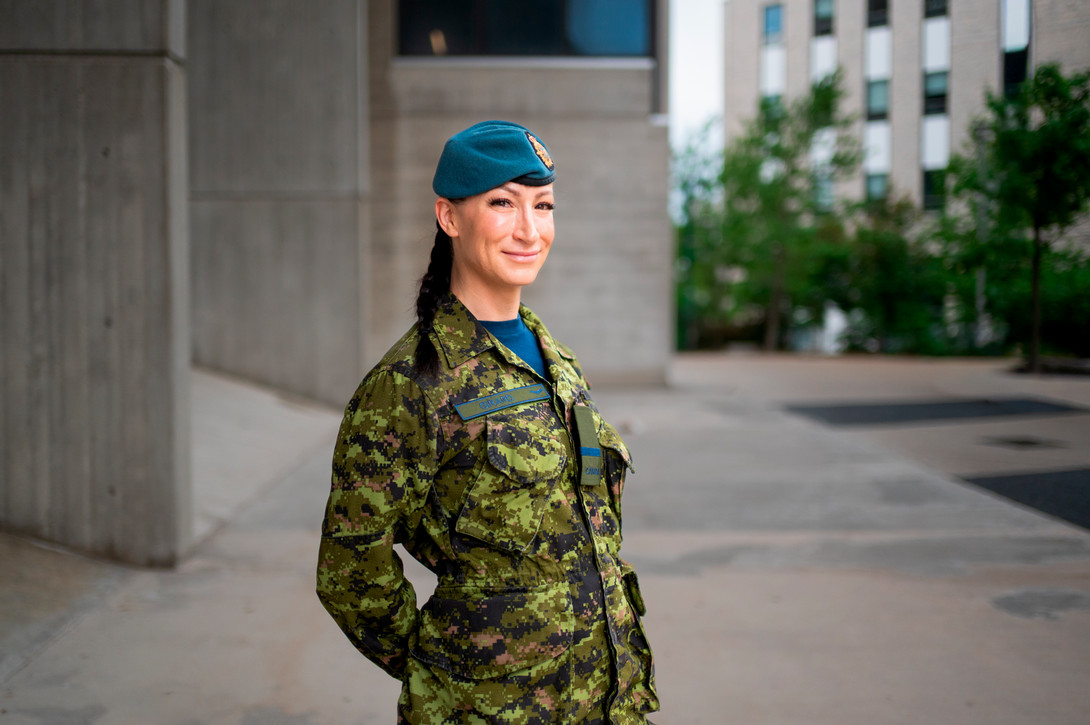
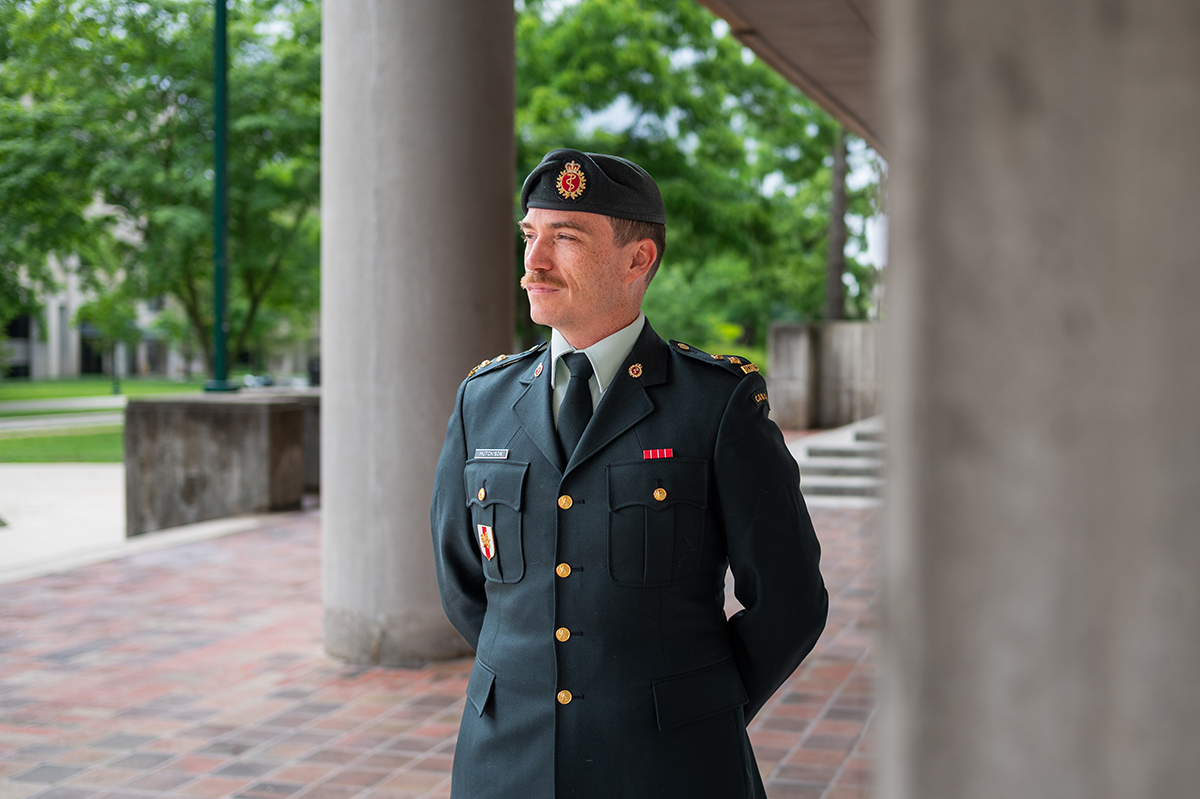
Today, students like Jessica Girard and Michael Hutchison are writing the next chapter. As members of the Canadian Armed Forces (CAF) enrolled in the Military Medical Training Program (MMTP), they are preparing to care for those who serve.
From fighter jets to family medicine
For more than a decade, Jessica Girard built a military career that took her from infantry training to maintaining CF-18 fighter jets.
But medicine was never far from her mind.
Growing up in Quebec, and later Peterborough, Ont., medicine was an ambition she carried through high school and into her undergraduate studies in forensic science at Trent University.
Along the way, she joined the reserves and quickly found a sense of purpose in military life.
“I’ve always challenged gender stereotypes, and I found the military setting to be empowering,” she says. “Everyone was held to the same standard, men and women.”
Girard served in the Canadian Army and the Royal Canadian Air Force, eventually specializing as an aviation technician. She rose quickly through the ranks, earning the highest technician qualification, Level A, in record time.
An unexpected posting to an administrative position prompted her to revisit a dream she had set aside years earlier.
“Maybe this is the perfect opportunity to pursue medicine while staying under the umbrella of the military,” she recalls thinking.
Now entering her third year of medical school, Girard says medicine offers the ideal combination of scientific discovery and patient care.
“I love understanding how things work,” she says. “Being able to use that knowledge to help people is incredibly rewarding.”
She has also found opportunities to bridge her military experience with health research.
Working with military surgeon and associate professor Dr. Rich Hilsden, Girard is studying how prolonged exposure to extreme cold affects menstruation among military personnel – research inspired by her own experience during an Arctic training exercise.
“I got to observe a phenomenon firsthand,” she says. “When I looked into whether it had been studied, it hadn’t.”
The project addresses a gap in knowledge about women serving in operational environments, an area she hopes to continue exploring throughout her career.
After residency, Girard will return to military service as a family physician.
Where service leads
By the time he arrived at medical school, Michael Hutchison had already built a career, raised a family and served in the CAF as a military medic.
The first person in his family to attend university, he also earned an undergraduate degree while working full-time in the military.
Medicine had not always been part of the plan.
“I honestly thought medicine was out of reach for me,” he says. “I never considered it because I never thought I could get here.”
Growing up in London, Ont., Hutchison joined the army cadets at age 11, drawn to activities like camping and navigation. By 17, he enlisted in the reserves. Soon after high school, he left for Alberta to serve full-time as an infantry soldier.
Away from home for the first time, he began rethinking what he wanted from a career.
He returned to Ontario and spent months trying different jobs – construction, cooking and factory work – before rejoining the military as a medical technician, a role similar to a paramedic.
It would become a 15-year career.
Hutchison served across Canada and overseas, embracing every opportunity that came his way. He developed expertise in winter medicine, supporting military operations in some of the country’s most remote environments.
As his career progressed, he began exploring the military’s physician assistant pathway, which required post-secondary education. To qualify, he enrolled in Queen’s University’s online health sciences program as a mature student.
Encouraged by his wife, military colleagues and physician mentors, he applied to medical school through the MMTP.
Now entering his second year at Schulich Medicine & Dentistry, he plans to return to military service as a family physician, ideally in Petawawa, where he and his family spent eight years building a life.
“I just love meeting people,” he says. “I pull on that one thread, ask the right question, and all of a sudden I get to know who they are.”