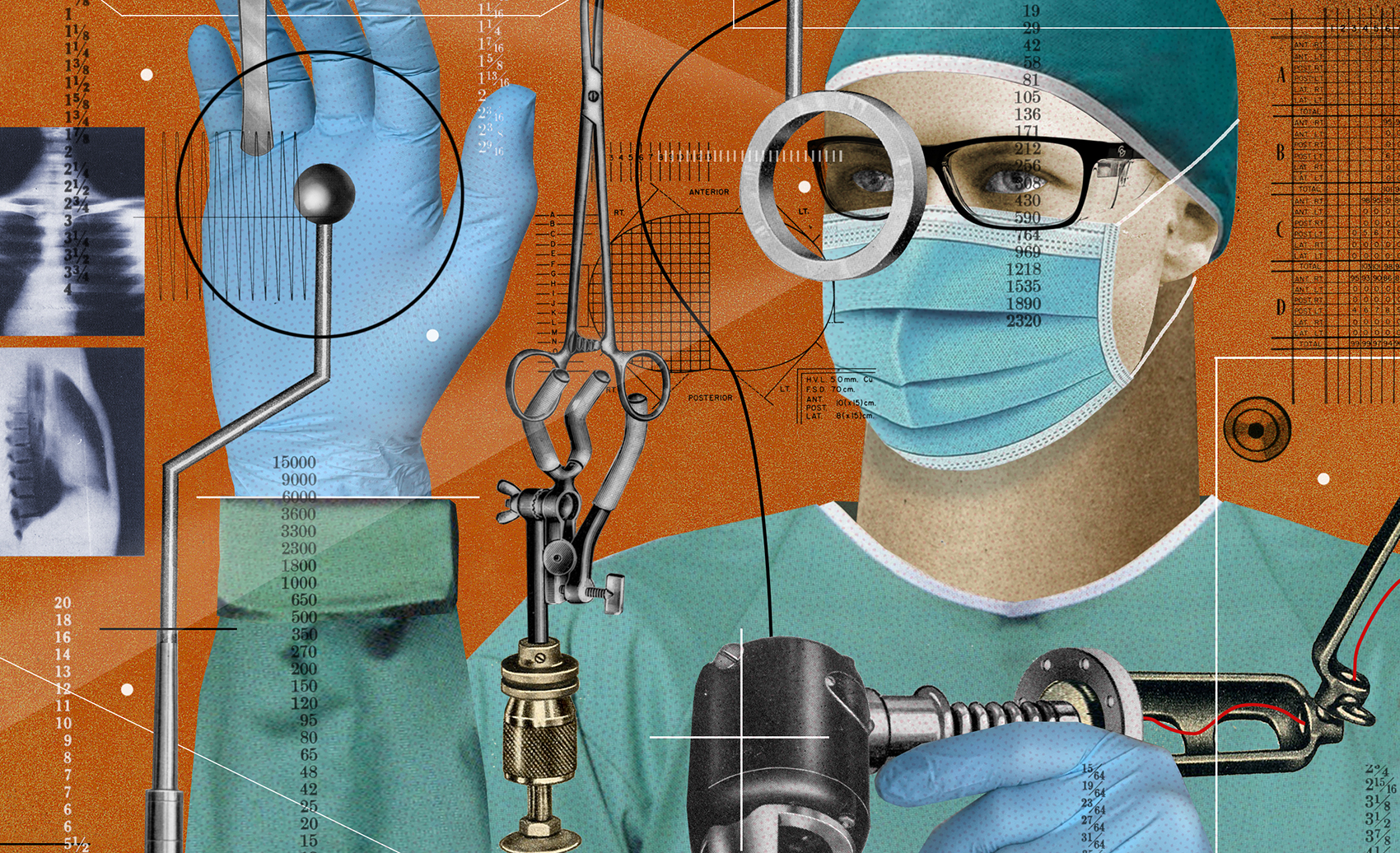


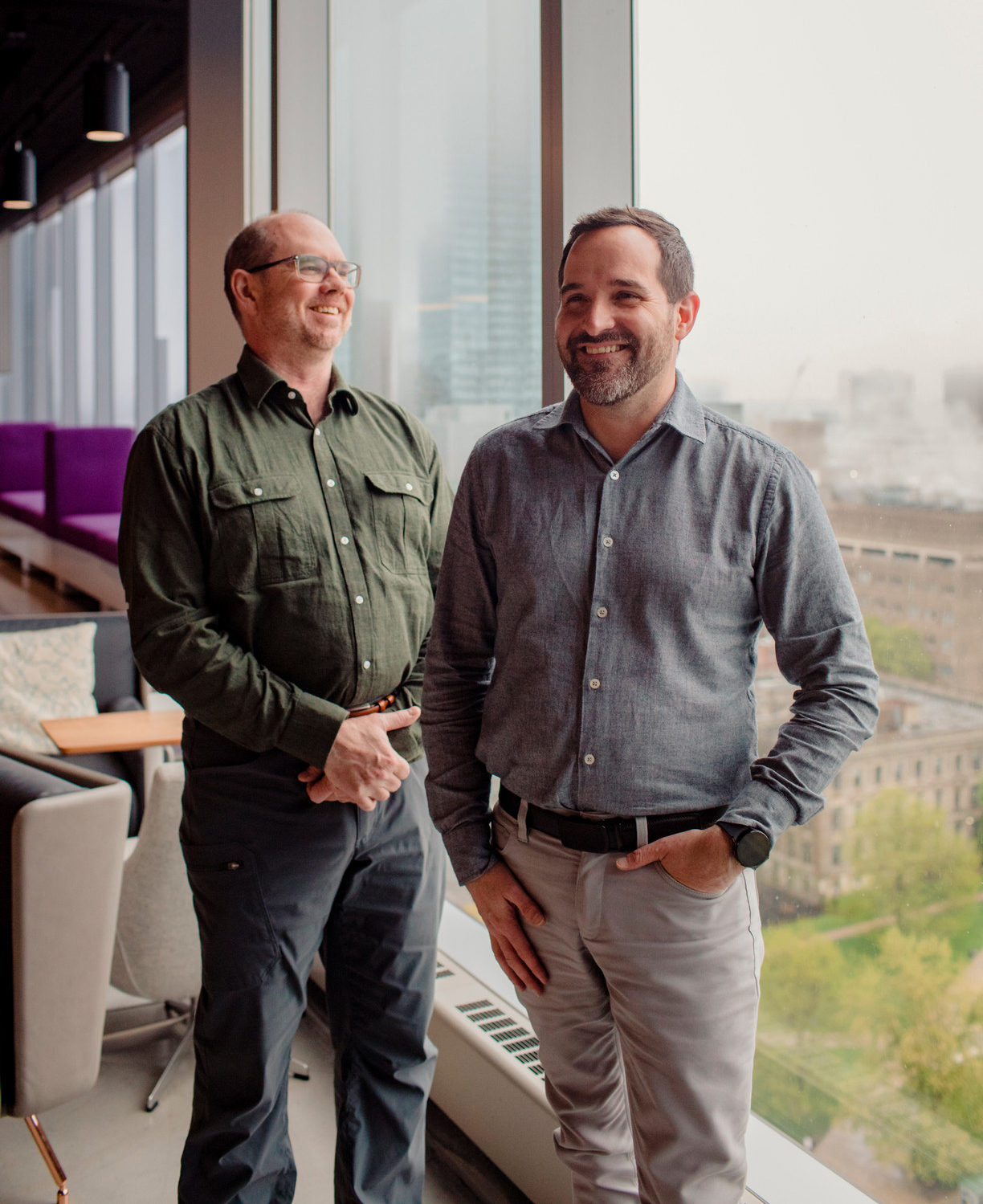
As a child, Brent Stead, PhD'11, was obsessed with Star Trek and the life-saving, science fiction tools of the Enterprise’s sick bay. As an adult, he’s on the cusp of separating the science from the fiction.
Stead, who holds a PhD in biochemistry from Schulich Medicine & Dentistry and MBA from Ivey Business School, is co-founder and CEO of Toronto-based Specific Biologics.
With a team of 20 employees, he is developing next generation gene-editing technologies aimed at conditions like cystic fibrosis and hard-to-treat neurological diseases.
“ It’s the difference between using a flip phone and a smartphone – same basic function, but dramatically more precise and responsive.” — David Edgell, PhD
“In Star Trek, they have this little pen they stick in your neck and suddenly you don’t have the disease anymore,” says Stead. “Well, what we’re doing feels a little akin to that.”
In a biotech landscape dominated by U.S. giants, Specific Biologics is emerging as a standout Canadian success story, transforming homegrown research into real-world impact.
The seeds of its success were first planted 15 years ago when Stead met biochemistry professor David Edgell, PhD, as a doctoral candidate working in a shared lab on campus.
When Edgell became a committee member and examiner on Stead’s PhD dissertation, the two got to know each other even better.
“Let’s just say Brent used to drink a lot of beer in my backyard,” Edgell says with a laugh.
Back then, Edgell was just beginning to explore an emerging technology that would go on to revolutionize gene editing: CRISPR-Cas9. While CRISPR has since earned a Nobel Prize and powered the first Health Canada-approved therapy for sickle cell disease, Edgell’s work aims to push the science even further.
“CRISPR is powerful, but precision is the key when you want to correct a specific mutation,” says Edgell, who serves on Specific Biologics’ advisory board. “You want to modify the genome at one position and nowhere else.”
That’s the leap Specific Biologics is trying to make – from powerful to precise. The company is advancing a technology that sharpens CRISPR’s accuracy. Called Dualase ® , Edgell likens it to a super-targeted GPS that homes in only on a specific sequence of disease-causing DNA.
Unlike traditional editors that make a single cut, this tool makes two – and that distinction matters. It helps the cell repair itself more accurately and lowers the risk of unintended genetic changes.
This underlying technology, known as dual-cleaving nuclease, forms the foundation of Specific Biologics’ commercialization efforts.
“With this approach, we're seeing large increases in accuracy," says Edgell. “It’s the difference between using a flip phone and a smartphone – same basic function, but dramatically more precise and responsive."
CRISPR: Betting Big on Gene Editing’s Breakout Star
A knock at the door
After graduation, Stead spent six years working in the biotech industry, all while keeping tabs on Edgell’s research. In 2017, he knocked on his old examiner’s door with a bold idea to bring next-generation gene editing to market.
“We always thought dual-cleaving nuclease had potential,” says Edgell. “But it wasn’t until Brent walked into my office that we had a conversation about turning it into potential medicines.”
With the support of Schulich Medicine & Dentistry, Stead joined Edgell’s lab on a research contract. Together, they refined the technology to the point where Stead could pitch his idea to investors – a challenge he likens to crossing the “Valley of Death.”
In 2021, he landed initial funding from Lumira Ventures and AdMare BioInnovations. That same year, the Cystic Fibrosis Foundation funded Specific Biologics’ work to deliver the gene-editing tool via an inhalable nanoparticle – with the goal of correcting mutations in lung cells. Research suggests that if the cystic fibrosis mutations are corrected in enough cells, patients could see a significant improvement.
Even though dual-cleaving nuclease technology has been around for about a decade, it’s been largely the subject of academic research. Specific Biologics is one of very few companies trying to get it to market.
“I often wonder why that is,” Edgell says. “Either we’re smarter than everyone else, or others are smarter than us. But people tend to under-estimate Canadian science in terms of innovation. Are you going to be able to buy it at the drug store next week? No. But might it be available to patients in five to ten years? I think so.”