


Search Website
The power of perseverance: Lessons from a Paralympic team physician
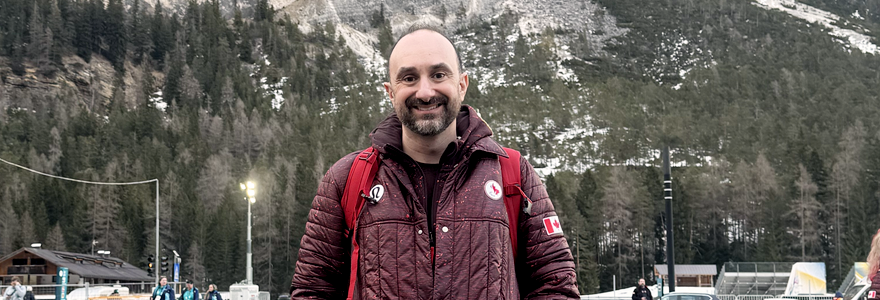
By Dr. Steven Macaluso
What Canada’s wheelchair curling team taught a physiatrist about movement, purpose and the human experience
By Dr. Steven Macaluso
Standing rink-side in Cortina, Italy, arms linked with my fellow Team Canada staff members, I watched Canada’s wheelchair curling team celebrate their gold medal at the 2026 Winter Paralympic Games. In that moment, I felt an overwhelming mix of pride, gratitude and appreciation.
As their team doctor, I had been part of this journey for eight years – years marked with long travel days, injuries managed in hotel rooms and training facilities, and countless conversations about pain, fatigue and recovery. I reflected on the injuries treated and prevented – the shoulders requiring constant maintenance, the hands and wrists enduring repetitive strain, and the skin and circulation issues that demanded vigilant monitoring.
Yet in that moment, none of those details mattered. What mattered was the culmination of a process that had been building for a decade: athletes becoming champions through discipline, trust and perseverance.
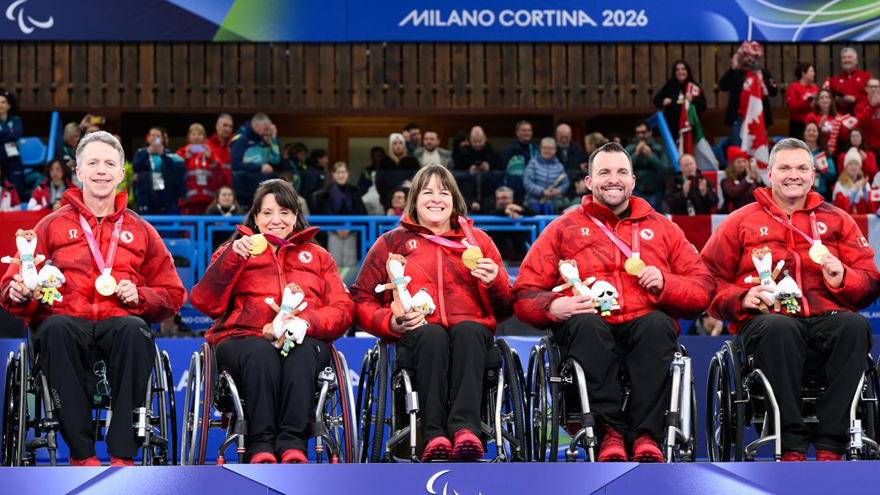
Team Canada’s Paralympic Wheelchair Curling Team. From left to right: Gilbert Dash, Collinda Joseph, Ina Forrest, Jon Thurston and Mark Ideson. (supplied)
As a specialist in physical medicine and rehabilitation, when I first began working with parasport athletes, I approached the role with the mindset of a traditional sports physician. I expected to manage acute injuries, guide rehabilitation and provide performance-focused care. And I did all those things.
What I didn’t fully appreciate at the time was how much I would learn – not just about adaptive sports and curling (I had only curled a few times and had never watch a full match), but about the human experience of those living with impairments.
Many of these athletes live with spinal cord injuries, amputations, neurological conditions or chronic medical complexities that require daily management. Their physical realities are not temporary setbacks – they are permanent aspects of their lives. Alongside the hard work and dedication required of all high-level athletes, Paralympians must also navigate additional barriers, from poorly accessible lodgings, restaurants and venues to the logistical challenges of travel.
Perhaps the most powerful message these athletes offer is what is possible when those barriers are challenged.
They show us that sport is not only about wins and losses – it is about identity, connection and purpose. Their example encourages people of all abilities to find a way to move, to participate, and to invest in their own well-being.
Associate Professor, Physical Medicine and Rehabilitation
As a physician, I have spent much of my career encouraging patients to exercise, stay active and prioritize movement as a foundation for health. But watching these athletes live that philosophy at the highest level has reshaped the way I communicate those messages.
I now see physical activity not only as a means of optimizing health, but as a tool for empowerment – a way to enhance self-efficacy, build self-confidence and foster a sense of autonomy. It cultivates the ability to persevere, even when medical issues flare unexpectedly or progress feels slow. Through sport, resilience is built in the face of challenge – when the body is stiff, the mind is tired or the spirit is tested by unforeseen circumstances.
In Cortina, as the Canadian anthem played and the gold medals were placed around the athletes' necks, I felt a deep sense of humility. I had the privilege of supporting these athletes medically, but also the gift of being reminded why I entered medicine in the first place: to help people pursue meaningful lives, maximize function and thrive despite adversity.
After eight years with this team, I can say with certainty that their gold medal represents far more than a victory on the ice. It represents years of perseverance, discipline and belief. It represents the power of sport to transform lives. And it stands as an invitation to everyone – whether living with disability or not – to embrace movement, care for our health and to recognize that strength comes in many forms.
Dr. Steven Macaluso is a physiatrist and associate professor in the Department of Physical Medicine and Rehabilitation at Schulich School of Medicine & Dentistry.