

Search Website
Tackling the mysteries of staph infections
By Houda Houbeish
Research sheds light on how a common bacterium protects itself and triggers life-threatening immune response
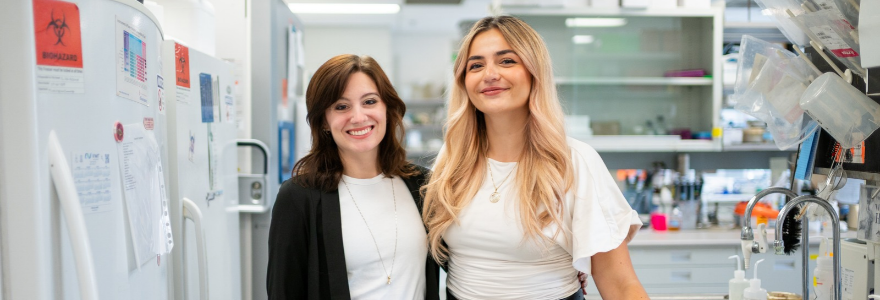
Camryn Marlene Bonn-Dunbar (left), a PhD candidate, and Carla Sorana Maduta (right), an MD/PhD candidate, are investigating different aspects of Staphylococcus aureus. Both recently received national awards for their research at the annual meeting of the Canadian Society for Microbiologists. (Megan Morris/Schulich Medicine & Dentistry)
By Houda Houbeish
For a bacterium that can live harmlessly on the skin, Staphylococcus aureus, commonly known as staph, has a remarkable capacity to cause disease. It can evade the body’s natural defences, withstand antibiotics and produce toxins that trigger a life-threatening immune response.
Understanding the biological mechanisms behind these abilities could offer clues for preventing and treating staph infections.
At Western's Schulich School of Medicine & Dentistry, graduate students Camryn Marlene Bonn-Dunbar and Carla Sorana Maduta are studying different aspects of this complex bacterium, from how it survives to how it makes us sick.
Both recently earned national recognition for their research at the annual meeting of the Canadian Society of Microbiologists (CSM).
How staph protects itself
Bonn-Dunbar was just 16 years old when her grandfather died after developing an antibiotic-resistant S. aureus infection.
His death left her with questions about how bacteria develop antibiotic resistance, paving the way for research she is doing today as a PhD candidate in microbiology and immunology.
Antibiotic resistance remains a major challenge in treating staph infections. The Public Health Agency of Canada identifies methicillin-resistant Staphylococcus aureus (MRSA) as a medium-high priority pathogen, underscoring the need for new approaches to infection prevention and treatment.
Working with Martin McGavin, PhD, professor of microbiology and immunology, Bonn-Dunbar is investigating how the molecular machinery that helps S. aureus survive on human skin might also enable it to withstand antibiotics.
Central to her research is a protein called FarE. Located in the bacterial cell membrane FarE acts as a molecular pump, moving substances out of the cell. This process helps protect the bacterium against naturally occurring antimicrobial fatty acids found on the skin.
Bonn-Dunbar is now studying the broader functions of this defence mechanism by focusing on both FarE and its regulator, FarR – a protein that helps control how much of the pump the bacterium produces.
“By better understanding the exact role of these proteins, I’m hoping we can develop new medicines that target them directly and support vaccine development, because developing vaccines against S. aureus has been very difficult,” she said.
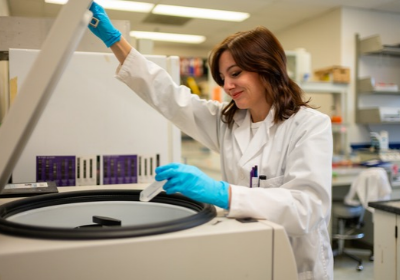
Bonn-Dunbar’s research, which received the CSM’s 2026 CCM Student Symposium Award, showed that the FarE pump has provided S. aureus to withstand selamectin, a veterinary drug, with potential applications as an antibiotic.
“This raises concerns about the mechanisms by which this bacterium may have already developed resistance to a new antibiotic before it has been introduced into clinical use,” she said.
She also found that FarR plays a role in regulating the production of some of the toxic molecules that enable S. aureus to cause or worsen infections.
Together, the findings help explain how S. aureus survives natural antibacterial defences on the one hand, and creates processes that can worsen infections on the other. Understanding how these proteins work could help researchers assess their potential as targets for future treatments.
“I think bacteria are incredibly unique and interesting. That's why I chose to study them,” she said. “They're very sophisticated organisms that use these systems to influence so many different pathways, both within the bacteria themselves and in their interactions with the host.”
How staph triggers toxic shock
S. aureus produces toxins capable of triggering an excessive immune response. One in particular – toxic shock syndrome toxin-1 (TSST-1) – is uniquely associated with menstrual toxic shock syndrome.Maduta is investigating what sets this toxin apart from others.
“While Staphylococcus aureus can produce about 25 or so toxins that function in a similar way, we don’t know why this is the only toxin that causes menstrual toxic shock syndrome,” she said.
Menstrual toxic shock syndrome is a rare but life-threatening condition that can develop when several factors converge. In someone carrying a TSST-1-producing strain of S. aureus in the vagina, changes in vaginal acidity and available glucose around menstruation can induce toxin production. Oxygen introduced through tampon use can also contribute to conditions that favour toxin production.
TSST-1 causes toxic shock by activating an unusually large proportion of immune cells called T cells.
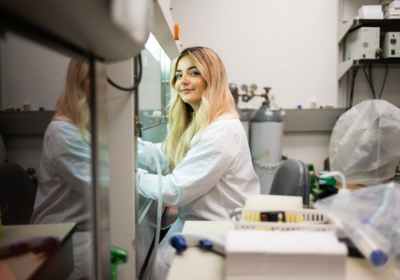
These cells release a flood of inflammatory signals that can cause blood vessels to leak fluid and blood pressure to drop dangerously low, depriving organs of the blood and oxygen they need to function. In severe cases, it can lead to organ failure.
Working with John McCormick, PhD, professor of microbiology and immunology, Maduta is exploring how the TSST-1 toxin interacts with different subsets of T cells.
“We think it may have something to do with the immune cells being targeted. This menstrual toxin can target a different type or subset of T cells that the other toxins can’t target,” she said.
Alongside scientific discovery, Maduta, recipient of the CSM’s 2026 Burrows Award for Womxn in Microbiology, hopes her research will help address misconceptions about menstrual toxic shock syndrome, particularly its association with tampon use.
“One of the things I hear is, ‘If you leave a tampon in for too long, you’ll get menstrual toxic shock syndrome.’ You could, but you also have to have the bacteria present, and it must be bacteria that produce the toxin,” she said. “It’s not quite as simple as it’s generally conveyed.”