

Search Website
Leadership program inspires students to drive social change in dentistry
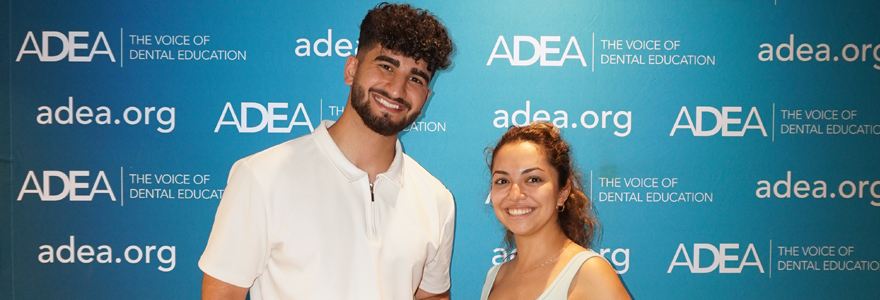
By Evelyn Jones
Muntdr Madlol and Zahra Danaei joined dental students from across North America to learn, collaborate and lead change
By Evelyn Jones
When Muntdr Madlol and Zahra Danaei arrived in Montreal for the opening of the 2026 American Dental Education Association (ADEA) Student Leaders for Social Change program, they quickly realized they stood out. They were the only Canadians in the room.
“We were literally Team Canada,” Danaei said.
Selected through a competitive process, the Schulich Dentistry students recently completed the six-month program alongside peers from across North America. Through two in-person conferences and several virtual sessions, they explored some of dentistry’s biggest challenges, including access to care, ethics, patient advocacy and professional leadership.
“The program brought a bunch of like-minded students together,” said Madlol. “We were all hungry to learn from each other.”
Although they entered the program with different experiences and aspirations, both Madlol and Danaei feel the program has given them a clearer vision of how they want to create change – lessons they’re already putting into practice.
“What is the problem? How do I want to fix it? What is the first step I can take? That’s the blueprint this program has given me,” Danaei said.
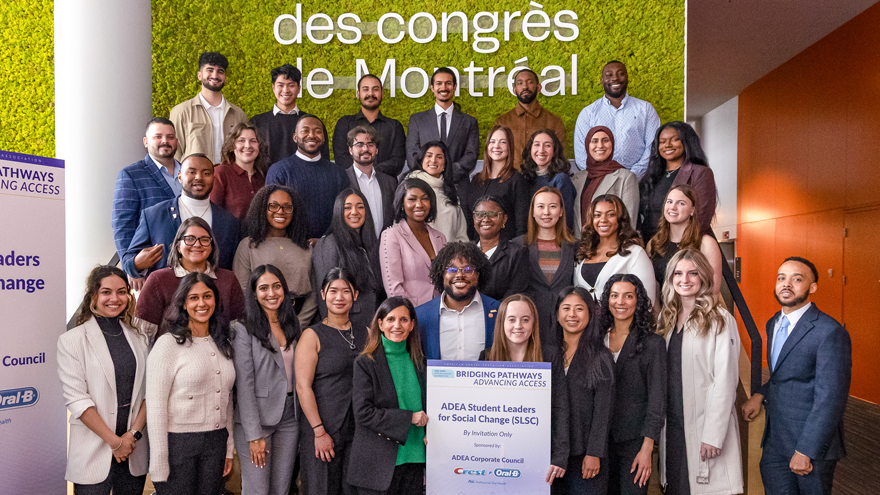
The ADEA Student Leaders for Social Change program's 2026 cohort was the first to participate in the expanded, six-month format, delivered through in-person and virtual sessions. (supplied)
Meeting patients where they are
When Madlol, DDS Class of 2028, explains why he chose dentistry, he begins with his family.
He recalls the time his brother needed oral surgery. After hearing the cost, his mother left the clinic believing the procedure would not be possible.
To the family’s surprise, the dentist covered the entire cost of the procedure.
That simple act of compassion stayed with him and, ultimately, inspired him to pursue dentistry.
Since entering dental school, Madlol has become deeply involved in student leadership. He served as Class President and took on roles with the Federation of Canadian Dental Student Associations and the Student Professionalism and Ethics Association.
Madlol has also extended that leadership beyond dentistry, raising more than $24,000 for health-care workers by competing in an Ironman 70.3 wearing medical scrubs.
Through group exercises, the program helped Madlol connect his leadership experiences to patient education. With many patients turning to social media for health information, he sees an opportunity for dental professionals to help counter misinformation.
“We can’t regulate what circulates online about dentistry by remaining absent from it,” Madlol said. "Part of our responsibility as dental professionals is making sure patients have accurate information they can understand and use to make informed decisions about their care.”
Rethinking what it means to lead
Before participating in the ADEA program, Danaei, DDS Class of 2027, associated leadership with holding prominent positions or prestigious titles.
“I didn’t really know what leadership could look like for me,” she said.
Through the program’s reflective exercises and conversations with other students and mentors, Danaei began to see leadership as something rooted in commitment, collaboration and a willingness to act on the issues that matter to her.
That perspective connected naturally with work she was already doing through the Royal College of Dental Surgeons of Ontario, creating educational case scenarios addressing ethics and conflicts between patients and dentists.
For Danaei, one area where she hopes to create change is improving care for patients with disabilities. She is now working with an instructor to give dental students more practical, hands-on experience in accessible care.
“A filling is a filling,” Danaei said. “It’s the communication that we have to adapt.”
Using her new definition of leadership, Danaei says she’ll continue advocating for care that responds to patients’ financial, cultural and accessibility needs.
“I want to make sure my patients are receiving equitable care.”