

Search Website
Five Schulich Dentistry students earn national research awards
By Houda Houbeish
Student research spans regenerative dentistry, dental imaging, biomaterials and the links between social conditions and children’s health
By Houda Houbeish
Five Schulich Dentistry students have earned national recognition for research exploring new approaches to oral health, from regenerating damaged dental tissues to understanding how social conditions affect children’s health.
The students received 2026 CADR-NCOHR Student Research Awards this month, which recognize outstanding student research and support recipients in presenting their work at national and international conferences.
The awards are jointly sponsored by the Canadian Association for Dental Research (CADR) and the Network for Canadian Oral Health Research (NCOHR), with Schulich Dentistry students accounting for 25 per cent of this year’s recipients.
“This recognition represents the growing strength and breadth of research at Schulich Dentistry,” said Dr. Noha Gomaa, associate professor in oral medicine and dental public health and the associate director for research at Schulich Dentistry. “I’m incredibly proud of our students and excited to see their work being showcased on national and international stages.”
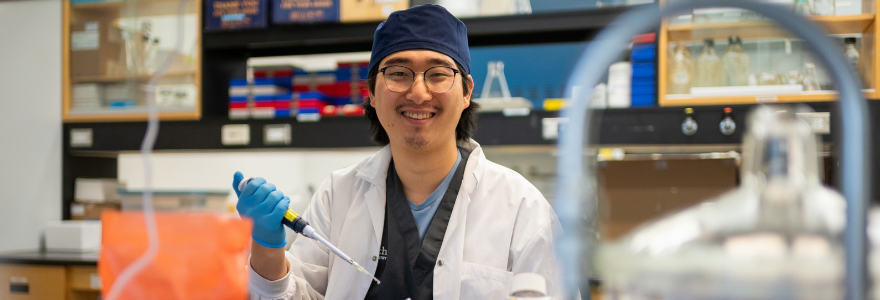
Among the recipients is third-year dental student Eric Mun, who ranked among the top two applicants nationally and will represent Canada at the International Hatton Competition in Melbourne, Australia, in June 2027. His research could help lay the groundwork for regenerating damaged tissues inside the teeth.
Dental pulp, the soft tissue inside a tooth containing nerves and blood vessels, helps keep the tooth alive and healthy. For children and adolescents, when the pulp dies before a tooth's roots have fully formed, root development stops, leaving the tooth weaker and more vulnerable to fracture and eventual loss.
“Current treatments do not reliably restore natural pulp tissue or allow root development to continue,” explained Mun. “One of the major challenges in regenerative endodontics is creating an environment that encourages stem cells to form tissue resembling natural dental pulp.”
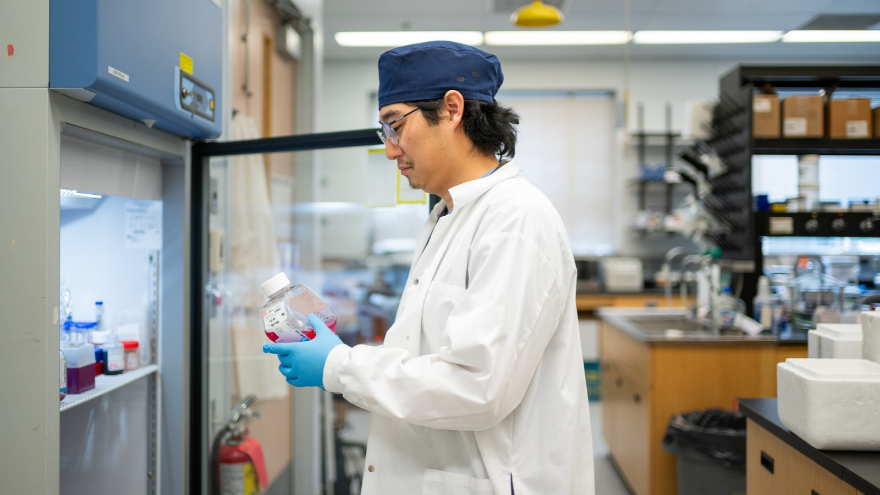
Eric Mun's research could help lay the groundwork for regenerating damaged tissues inside the teeth. (Megan Morris/Schulich Medicine & Dentistry)
Under the supervision of Dr. Georgia Nikoloudaki, Mun is developing a biomaterial coating made from bovine dental pulp. The researchers remove the original cells while preserving the extracellular matrix – the natural environment that supports cells and sends biological signals that influence how they grow and behave.
By growing dental stem cells on the coating in the laboratory, the researchers can study how these natural components influence stem cell behaviour, with the longer-term goal of developing materials that could support tissue regeneration.
The research is still at an early stage, but could eventually inform treatments that help young patients preserve their natural teeth.
Mun is looking forward to sharing this work and connecting with researchers from around the world at the upcoming competition.
“It is an honour to represent Canada at an international conference. I am especially excited to share the high-quality research that is being conducted at our school,” he said. “I am looking forward to meeting researchers from around the world and learning about the different areas of research being explored in dentistry globally.”
The other four recipients represent research spanning dental imaging, biomaterials and the relationships between social conditions and children’s health:
- Marie Le, a DDS/PhD candidate supervised by Dr. Gürkan Ünsal and Aaron Fenster, PhD, is investigating the feasibility of a head-mounted 3D ultrasound system to standardize imaging of the temporomandibular joint, which connects the jaw to the skull.
- Rafaela Passos De Souza, a PhD candidate supervised by Dr. Sheila Butler, is studying how nanoparticle-modified (PEO) coatings enhance titanium bioactivity in simulated body fluid.
- Luis Limo, a PhD candidate, supervised by Dr. Noha Gomaa, is investigating connections between socioeconomic disadvantage, biological aging, and child oral and developmental health.
- Sandra Zivkovic, DDS Class of 2028, supervised by Dr. Noha Gomaa, is examining how parental stress and children’s dental caries are amplified by family socioeconomic disadvantage.