


Search Website
At the heart and health of the Winter Olympics: In conversation with Dr. Jane Thornton
By Emily Leighton
The IOC’s Director of Health, Medicine and Science reflects on athlete well-being, equity and building a better world through sport
By Emily Leighton
As the Winter Olympics unfold in northern Italy, athletes are pushing speed, strength and endurance to their limits on snow and ice.
For Dr. Jane Thornton, the real test lies beyond the competition – in the systems that determine how athletes are cared for, protected and supported on a global scale.
Appointed as the International Olympic Committee’s (IOC) Director of Health, Medicine and Science in 2024, Thornton oversees a wide-ranging portfolio that spans medicine, research and policy, shaping how athlete well-being is addressed across the Olympic Movement.
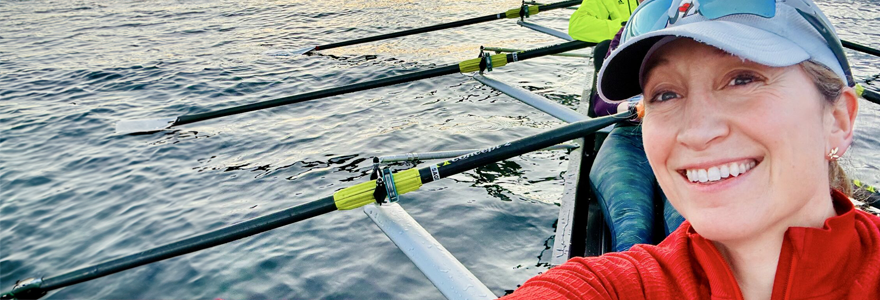
An associate professor at Western’s Schulich School of Medicine & Dentistry and Faculty of Health Sciences, she is a former Western Mustangs varsity rower who represented Canada at the 2008 Olympic Games in Beijing. Her career has also included medical and research roles at Olympic Games in Athens, Sochi and Rio.
With competition underway in Milano Cortina, Thornton reflects on how health, safety and equity shape success, the unique health risks of winter sport and why movement remains one of the most powerful legacies of the Olympic Games.
As the 2026 Winter Olympics get underway, what moments have stood out to you so far?
The Opening Ceremonies have always been a highlight of the Olympic Games for me, watching the athletes entering the stadium and knowing how incredible it felt to walk into the Bird’s Nest Stadium in Beijing in 2008 behind the Canadian flag. The Opening Ceremonies of Milano Cortina 2026 were no exception – they were dazzling from beginning to end, and you could feel the joy and pride of the athletes as they walked in wearing their countries’ uniforms. Unforgettable.
As IOC Health, Medicine and Science (HMS) Director, you now operate at the intersection of medicine, science and global sport policy. What have been your biggest lessons in the role so far?
The biggest lesson so far has been gaining a deeper appreciation for the interconnectedness of all the IOC departments and the functional areas of the entire Olympic Movement ecosystem. Learning from all my fellow directors has given me new perspectives and possibilities for how much we can accomplish by putting our minds together and keeping the athletes at the centre of what we do.
We need a truly global perspective to grasp how the intersecting concepts of health, medicine and science in sport are understood and engaged with around the world. There is so much we can still improve in health-care delivery for sport and in education. Being part of long term, sustainable change is exciting, but it takes concerted, collective effort.
You’ve lived elite sport from different perspectives – as an athlete, a physician and now a global leader. What still surprises you the most about elite sport?
What I continue to find most striking is the genuine desire of so many to live up to the Olympic objective of building a better world through sport. It’s something I’ve experienced now from multiple perspectives. There are, of course a range of motivations for people to be involved in elite sport but, when difficulties or challenges arise, I find myself consistently reminded of how much sport can bring us together and inspired by how movement promotes health and brings joy.
Turning to Milano Cortina 2026, what will success look like from a health and well-being perspective?
Success looks like this: athletes feeling confident to perform at their best and feeling supported in terms of their physical and mental health. Given the spread-out nature of the venues at these Games, we are monitoring to ensure that support personnel can provide efficient and effective health support and acute care with as little delay as possible. These teams have come together so well and, of course, the Italians are world renowned in the field of health and medicine, so the standard and quality of care is exceptionally high.
I can mention two concrete examples of initiatives that highlight successes we are aiming for the Games.
First, the MindZone, which was introduced at Paris 2024 as a "calm and restorative space to recharge, practise mindfulness and access confidential support". We received a lot of positive responses from athletes about it, and it will once again be available at Milano Cortina 2026.
Second, improvements in illness and illness surveillance will allow us to gather data that improve health-care service delivery and also improve coordination and communication in ways that can improve future Games.
Winter sport brings unique health challenges. What health concerns are you watching most closely?
The big difference in the winter is the speed of athletes moving on snow and ice, so impacts and collisions can be relatively more severe than similar instances in summer sports.
Keeping athletes safe comes down to three major components: first, the competition infrastructure and athlete equipment are built for maximum athlete safety within the constraints of each sport; secondly, the athletes are, of course, trained to a high degree of physical fitness and technical skill; and thirdly, we have a well-trained and coordinated medical support system with competence and capacity to intervene if needed.
It is also important to note that insuring athlete health at the Games is not just about preventing or responding to catastrophic collisions. Caring for athletes means dealing with a whole range of issues from respiratory illness to chronic injuries to monitoring and planning for environmental risks. All of this requires a dedicated team and significant coordination with the regional and national health authorities.
The Olympic movement includes athletes from vastly different health systems and resource settings. How do you think about equity in your work?
This is an important question for us and something I am proud to say HMS is addressing proactively in line with our vision to 'build a healthier world through sport'. By actively engaging with local and regional sport medicine representatives through National Olympic Committees, International Federations and sport and exercise medicine professional associations, we are identifying and addressing gaps in training and capacity.
Our aim here is to empower and equip a new generation of sports medicine and allied professionals to deliver the highest quality care for athletes in ways that fit and enrich rather than compete with the diverse mosaic of their local settings. This also means including diverse voices when it comes to policy development and building capacity on the ground to ensure sustainable, local involvement as a link between athletes in their own communities and the emerging medical best practice that can support them to pursue their dreams.
Another focus for HMS is providing global leadership in targeted research to understand better the relationship between physical activity and health in populations underrepresented in traditional research, including women. The IOC is well positioned as a leader in this regard and promoting research in this space is a top priority for HMS that will have a real impact on women's and girl’s health globally and ensure that sport becomes a possibility for so many more people around the world.
What advice would you give to young athletes and/or medical trainees who hope to combine sport, science and service on a global stage?
Allow for excellence in yourself and others. This was an attitude I experienced firsthand when working with an amazing coach and mentor, Carsten Hassing, who came on as head coach for Canada’s women’s rowing team when I was at a low point in my career. By simply keeping an open mind and allowing for excellence, he gave me a chance; that was the year my rowing partner and I became world champions and the following year qualified for the 2008 Beijing Olympic Games.
Whether it has been as an elite athlete, a physician, a scientist or a leader, I've grown most and excelled when surrounded by this attitude. It is an attitude I also try to live by in my current role to support my team.
What do you hope those of us watching at home take away from the Winter Olympics?
I hope that someone watching at home will be inspired to move more and try sport.
As a sedentary kid, I came to sport as a teenager. Don Dickison, an Olympian from my hometown of Fredericton, NB came back home and started a rowing team. He shared his love of movement and sport with a whole new generation of kids and for me, opened up a world of possibilities. I am so grateful and my hope is that this and future Olympic Games can inspire not just athletes to create more sport opportunities in their hometowns, but anyone else too.
Giving space and time for kids (and adults) to move together makes our communities stronger, healthier, and our connections more meaningful. This is how I believe we can build a better world through sport – and a healthier one as well.