


Search Website
QUICK LINKS:
Transforming cancer treatment: Taylor Prize honours CAR T-cell therapy pioneer
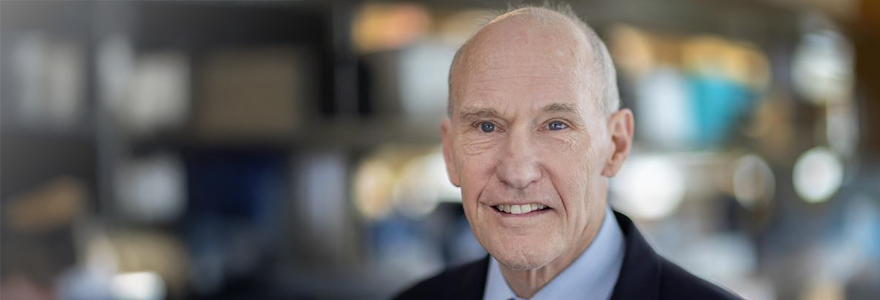
By Patrick Morley
It’s no exaggeration to call Dr. Carl June a global titan of cancer research.
Best known for developing CAR T-cell therapy — a groundbreaking treatment that reprograms a patient’s own immune cells to recognize and destroy cancer — June’s pioneering work has saved countless lives around the world.
What began as an outside-the-box idea in the early 1990s has become one of the most important advances in modern oncology.
Now, June, a professor at the University of Pennsylvania Perelman School of Medicine, is being honoured as the 2025 recipient of the J. Allyn Taylor International Prize in Medicine, a medical research prize awarded by Schulich School of Medicine & Dentistry and Robarts Research Institute since 1985.
From an unlikely idea to a medical breakthrough
In the early days, the idea of genetically modifying T-cells to attack cancer sounded improbable.
“No one thought it would ever work, and even I didn’t think it would,” June recalled during a video call from his home office in Philadelphia.
At that time, cancer treatment options were dominated by surgery, chemotherapy, and radiation — all of which carry significant side effects and often require repeated courses. The concept of engineering immune cells into “living drugs” was far outside the mainstream.
Despite the doubts, June pressed forward. He believed that if the body’s immune system could be taught to recognize cancer cells the same way it detects viruses, it could offer a powerful and long-lasting treatment.
It turns out, he was right.
This commitment to advancing transformative, patient-focused research is precisely what the Taylor Prize was created to honour. This year’s $50,000 prize acknowledges the power and potential of cell-based immunotherapy in treating cancer — therapies that use the immune system to recognize and destroy cancer cells. Dr. June’s research stands at the forefront of this revolution.
“Cancer has now surpassed all other diseases as the leading cause of death in Canada and much of the world, making this year’s Taylor Prize theme particularly relevant,” said Robert Bartha, PhD, vice dean of research and innovation at Schulich Medicine & Dentistry. “Dr. June’s groundbreaking work in CAR T-cell therapy has reshaped the field and inspired scientists worldwide to push the boundaries of what is possible.”
The Taylor Prize, which will be presented to June at a special celebration on November 25, is more than a personal honour. For him, it’s a chance to shine a light on the importance of investing in fundamental research.
“I’m honoured to receive the Taylor Prize,” he said. “The award is a platform to showcase why scientific research matters in the bigger picture. The value of the prize is that we can help create awareness as to why scientific research matters now more than ever.”
The turning point
The true breakthrough for June’s research came in 2012 with a seven-year-old patient named Emily Whitehead. Suffering from an aggressive leukemia, Emily had exhausted all treatment options when she became the first pediatric patient in the world to receive CAR T-cell therapy. The results were remarkable: her cancer disappeared, and she has remained cancer-free ever since.
Today, Emily is a college student. The genetically modified T-cells that saved her life are still in her body, providing ongoing protection. Her story has become a powerful symbol of what CAR T-cell therapy can achieve in the real world.
CAR T-cell therapy begins by collecting a patient’s own T-cells — a type of white blood cell that helps fight infections. Then scientists insert new genetic instructions into these cells. The changes allow the T-cells to produce special receptors, called chimeric antigen receptors (CARs), which can identify and attack cancer cells.
Once returned to the patient’s body through a one-time infusion, the modified cells multiply, hunt down cancer cells, and can remain active for years. June calls them “living drugs” because they don’t just act once; they keep working over time.
Looking ahead
CAR T-cell therapy has already transformed the treatment of certain blood cancers such as leukemia and lymphoma. Now, June and his colleagues are working to adapt it for solid tumours — including pancreatic and brain cancers — which have so far proven more challenging.
“I believe the problem of solid tumours is going to get solved,” he said. “There are literally thousands of labs in the world working on it.”
Beyond cancer, June sees potential for using CAR T-cell technology to treat autoimmune diseases such as multiple sclerosis and rheumatoid arthritis. These conditions occur when the immune system attacks the body’s own tissues and have long been considered incurable. By reprogramming immune cells, June believes they could one day be stopped or even reversed.
At 72, June remains driven by curiosity and hope. During his career, he has witnessed medical priorities shift — from battling infectious diseases to confronting cancer as the leading cause of death. Each major advance, he believes, is the product of persistent, passionate inquiry.
June sees himself as more than a scientist; he’s also an advocate for science itself. He has long pushed for better public understanding of scientific work, especially in an era of misinformation and mistrust. He believes scientists have a responsibility to explain how basic research leads to real-world treatments.
He also values international collaboration, having worked with researchers and students from nearly every continent.
“Science has the power to rise above political differences, even in times of global tension,” he said.
As he continues his research, June is optimistic about the future. “Science is at an era where it’s never been brighter.”
June will be featured, along with seven top cancer researchers, in the second season of the podcast miniseries The Catalysts, produced by Schulich School of Medicine & Dentistry in association with the J. Allyn Taylor International Prize in Medicine. The new season launches this fall on October 6.