


Search Website
QUICK LINKS:
Researchers travel coast to coast to uncover solutions for women veterans facing homelessness

By Cynthia Fazio
Research team led by Cheryl Forchuk, PhD, gathering first-hand accounts to inform change
By Cynthia Fazio
A year into a four-year national study, Cheryl Forchuk, PhD, and her research team are uncovering the realities faced by women veterans who have experienced or are experiencing homelessness. The team, including two medical students, is gathering data and stories from more than 100 participants in every province and territory.
Home Depot's slogan, "How Doers Get More Done," became their unofficial motto as they travelled across Canada to get first-hand accounts from women veterans.
When Emily Angus, a PhD student in the Arthur Labatt Family School of Nursing, realized there were no rental cars left in the city where she and Forchuk were conducting interviews, she improvised.
“I ended up renting a van from Home Depot,” she recalled. “Their slogan was right on the side and it felt fitting because nothing was going to stop us from reaching that participant."
That trip, over an hour outside of the city, led to an interview for Forchuk’s national study – a federally funded project aimed at understanding how gender, service history and housing intersect for Canadian veterans.
“We need to understand the needs of specific subpopulations to end homelessness. This requires having in-depth conversations,” said Forchuk, a professor in the Faculty of Health Sciences with a cross-appointment at Schulich Medicine & Dentistry.
Relationships crucial to research success
For Angus, who’s been doing outreach with people experiencing homelessness for several years, the experience was a lesson in persistence and compassion.
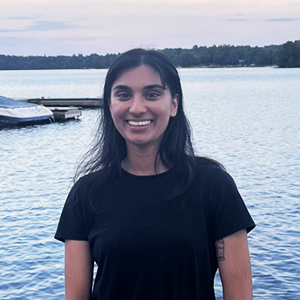
We're hearing first-hand how information sharing needs to change.
MD Candidate
“The relationship you build with participants is everything,” she said. “Getting really good information comes from building trust. To spend time with the participant and have fruitful discussions, especially for the qualitative part of the interview, it’s so important to build that relationship.”
This summer, Angus travelled to St. John’s, N.L., Winnipeg, Saskatoon, Regina and Prince Albert, Sask. speaking with community agencies and veterans’ groups to identify potential participants.
“It takes conversations with so many people just to get one lead,” she said. “You can’t just walk down the street and find a woman veteran who has experienced homelessness. You have to earn the community’s trust.”
Nikita Burman, a second-year medical student, agrees. As part of Schulich Medicine & Dentistry’s Summer Research Training Program, she visited Yellowknife, Edmonton, and Ontario cities such as North Bay, Barrie, Newmarket and Toronto, conducting outreach with Indigenous and veterans’ organizations. She spoke with one participant who had previously experienced homelessness in her home.
“She invited me to her apartment because that’s where she felt comfortable,” Burman said. “She talked about what worked and what didn’t – she had incredible ideas for how supports could be improved.”
Through that conversation, Burman learned many women veterans are unaware they qualify for veteran supports.
“Many male veterans are aware they are eligible for supports through the Poppy Fund or similar programs upon discharge from the military, but that’s not the case for a lot of women,” she said. “We’re hearing first-hand how information sharing needs to change.”
Third-year medical student Mihir Pandya said the project connected years of academic study with real-world impact.
“I had done research on homelessness before, but it was all behind a screen,” he said. “Once you are out in the field, talking to individuals experiencing homelessness or even talking to organizations that provide services, I think you gain a very different perspective.”
Pandya joined Forchuk on outreach visits across the East Coast – from Fredericton and Moncton in New Brunswick to St. John’s and Happy Valley-Goose Bay in Newfoundland – mapping routes, taking field notes and helping community agencies understand the study’s goals. Back in Toronto, he joined Burman to conduct the interview with a woman veteran.
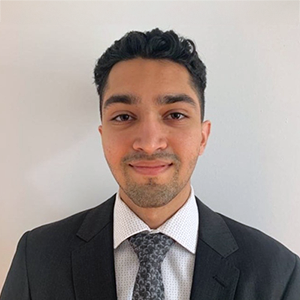
Once you are out in the field, talking to individuals experiencing homelessness...you gain a very different perspective.
MD Candidate
“You realize people can do everything right – live responsibly, serve their country – and still face homelessness through pure misfortune. That makes you grateful, but it also reminds you how fragile stability can be," he said.
Pandya said the lessons will stay with him as a future physician.
“Health is shaped by so many social factors, such as housing, income and trauma,” he said. “Understanding those determinants helps me become a better doctor and advocate.”
The study’s findings will help inform policy, housing programs and supports tailored to women veterans. It’s a complex task requiring persistence, empathy and creativity – qualities Forchuk and her students have demonstrated in spades.
Burman said the experience has reshaped how she views medicine and policy.
“This project shows the importance of listening,” she said. “We can’t design one-size-fits-all solutions. A single mother who’s a veteran has completely different needs than a single man. The only way to know that is to actually talk to them.”
For Angus, those conversations, whether in a city shelter or a rural community, reflect the heart of the research.
“We’re not collecting data just to collect data,” she said. “We’re collecting it so that we can make change.”