


Search Website
QUICK LINKS:
Major federal funding boost propels health research to new heights
By Emily Leighton
With more than $20 million in new federal funding, researchers at Schulich Medicine & Dentistry are advancing a wide spectrum of biomedical and health research – from cancer immunotherapy and chronic disease to neuroscience, medical imaging and health systems innovation.
“This funding is a tremendous show of confidence in the quality, creativity and impact of the medical and basic science research being led at Schulich Medicine & Dentistry,” said Robert Bartha, PhD, vice dean of research and innovation. “It illustrates the broad scope and potential impact of scientific inquiry happening across the School and London (Ontario).”
As part of the latest project grants competition from the Canadian Institutes of Health Research (CIHR), 15 projects at the School received a combined $13.1 million. In addition, a hospital-based project received close to $1 million in funding.
The federal government also announced new grants, scholarships and fellowships through CIHR, the Natural Sciences and Engineering Council of Canada (NSERC) and the Social Sciences and Humanities Research Council of Canada (SSHRC) earlier this month, as part of a $1.3 billion investment in Canadian research.
At Schulich Medicine & Dentistry, 31 projects received funding from NSERC's Discovery Grants and Research Tools & Instruments programs, totalling more than $7 million.
And through SSHRC’s Insight Development Grants program, Christine Bell, PhD, received support for a timely study exploring how generative AI can be used to help students better understand and apply academic feedback.
“This kind of investment enables our researchers to pursue new ideas that will lead to new and effective treatments, improving lives and deepening our understanding of fundamental biological and physical processes that impact our health,” said Bartha.
A new ally in the fight against bladder cancer
Bladder cancer may soon have a surprising new ally: bacteria.
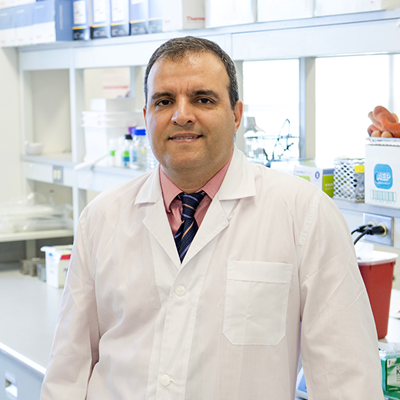
A research team led by Mansour Haeryfar, PhD, professor of microbiology and immunology, has identified a powerful group of immune cells, called MAIT cells, concentrated in the bladder’s lining. Known for their ability to detect and respond to bacterial threats, these cells may also help the immune system recognize and attack cancer.
With new CIHR funding to study how bacterial products activate MAIT cells, the team hopes to unlock a new kind of immunotherapy – one that uses bacteria to boost the body’s natural defenses and target bladder tumors more effectively.
“Our goal is to design novel therapies for bladder cancer, to test their efficacy in preclinical models, and to ultimately translate our findings from the benchtop to the bedside,” said Haeryfar.
What makes this approach especially promising is its potential for universal application. MAIT cells are activated through a molecule called MR1, which is shared by all humans.
“Because MR1 is the same in everyone, MAIT cell therapies have the potential to work across all patients – no matter their genetic background,” explained Haeryfar.

Understanding remission in severe asthma
Biologic therapies are transforming the way we treat severe asthma, offering relief – and even remission – for patients whose symptoms were once difficult to control.
But are these powerful drugs simply addressing the symptoms and flares, or are they actually involved in healing the lung airways?
A new pan-Canadian study is the first in the world to take a closer look. Led by Grace Parraga, PhD, professor of medical biophysics, the interdisciplinary, multi-centre study will combine advanced imaging, tissue analysis and clinical data to investigate whether biologic therapies can reverse long-term airway damage that drives worsening asthma.
With new CIHR funding, the project builds on earlier findings from a single-centre study, which showed 40 per cent of patients in clinical remission also showed complete recovery of airway function using MRI methods Parraga’s team developed.
“We know these patients feel better, but the bigger question is, are we actually resetting the disease?” said Parraga, Canada Research Chair in Lung Imaging to Transform Outcomes. “If we can show that biologics repair the airways, not just relieve symptoms, it will change how we define success in asthma treatment and lead to a cure.”
CIHR Project Grants
Corey Baron; Ali Khan
Microstructural brain aging across the lifespan of mice
Stephen Barr
Hiding the enemy within: Understanding HIV-1 Integrase Preference for G4 DNA and its Implications for Viral Persistence
Lillian Barra
The role of immune responses to citrullinated and homocitrullinated proteins in rheumatoid arthritis-associated atherosclerosis
Rodney DeKoter
Mechanisms of cooperativity of PU.1/Spi-B and IKZF3 mutations in normal and leukemic B cell development
Stefan Everling
Role of the pregenual anterior cingulate cortex in vocal communication: Bridging auditory perception and vocal production
Aaron Fenster
Development and Testing of a Whole Breast 3D Ultrasound Imaging System
Mansour Haeryfar
Bacterial Immunotherapy for Bladder Cancer
Pingzhao Hu; Kun Ping Lu
AI-Driven Platform for Large-Scale Screening, Analysis, and Experimental Validation: Targeting Pin1 for Precision Drug Discovery in Triple-Negative Breast Cancer
Joseph Mymryk
Viral mimicry of the heptapeptide repeat of the RNA polymerase II C-terminal domain by adenovirus E1A.
Grace Parraga
How do the lung airways and vessels respond to biologic therapy in patients with severe asthma?
Tianqing Peng
Mitochondrial calpain-mediated ATP5A1 proteolysis in heart failure: therapeutic potential applications
Caroline Schild-Poulter
Investigating the molecular pathology of WDR26 deficiency
Susanne Schmid
Mechanistic Investigation of Prepulse Inhibition for Advancing Treatment of Sensory Filtering Disruption
CIHR Project Grants funded via London Health Sciences Centre Research Institute
Saman Maleki
The role of macrophages in anti-PD1 sensitivity in mismatch repair-deficient tumours
CIHR Priority Announcement
Robert Petrella
Sport fandom to engage newcomers to Canada in type 2 diabetes prevention: A pilot, cluster randomized controlled trial of a community-based health behaviour change and exercise intervention (FIT for Newcomers)
Novel Mechanisms in Doxorubicin-induced Cardiomyopathy