


Search Website

Drug Safety and Pharmacovigilance (MSc)
Our one-year program provides a multidisciplinary foundation in drug safety, with specialized courses in pharmacology, toxicology, pharmacogenetics, epidemiology and law.
Drug Safety and Pharmacovigilance (MSc)
Our one-year program provides a multidisciplinary foundation in drug safety, with specialized courses in pharmacology, toxicology, pharmacogenetics, epidemiology and law.

Drug Safety and Pharmacovigilance (MSc)
Our one-year program provides a multidisciplinary foundation in drug safety, with specialized courses in pharmacology, toxicology, pharmacogenetics, epidemiology and law.
About the program
- Program name: Drug Safety and Pharmacovigilance
- Degree level: MSc
- Duration: 1 year
- Application deadline: April 30 (International), June 1 (Domestic)
- Contact: Olga Krougly okrougly@uwo.ca
Reasons to study
Expert faculty
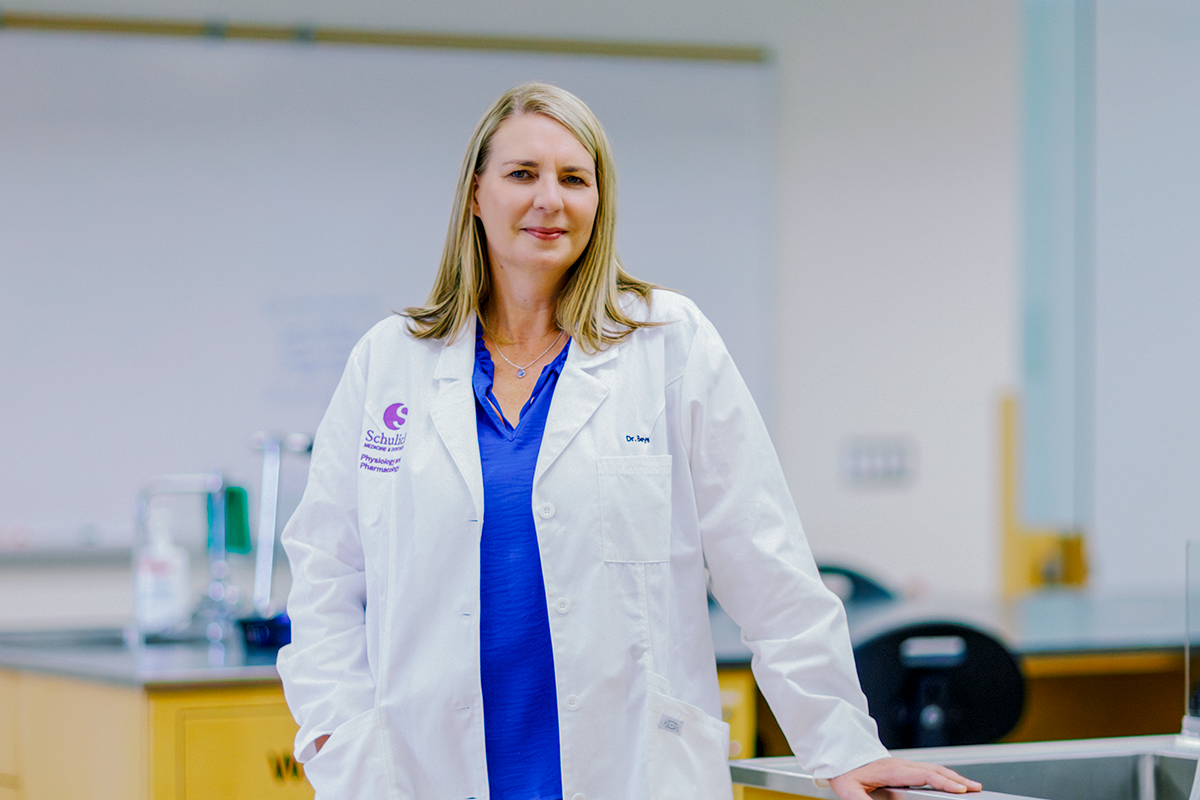
Receive mentorship and training from faculty with diverse expertise in areas including pharmacology and toxicology, genetics, epidemiology and law

Small class sizes
Get more out of the classroom with a small cohort of peers that will push you to your full potential

Graduate-level skills
Develop advanced communication skills in interdisciplinary research and collaboration
Learning & Research
Clinical Pharmacology
Human Toxicology
Pharmacogenomics and Variability in Drug Response
Adverse Events of Drug Use
Pharmacovigilance: Methods and Applications
Legal Aspects of Drug Safety
As a learner in the program you’re required to complete a major research project related to the field of drug safety. This selection of recent projects will give you an idea of the depth of inquiry and topics covered.
Gabapentin Toxicity in Overdose: An Independent Risk Assessment
Pregnancy as a Risk Factor for Drug-Induced Long QT Syndrome
Drug Therapy and Oral Health Outcomes: A Systematic Review and Meta-Analysis
Varenicline and Panic Attacks: Evidence from Clinical Trials and Pharmacovigilance Data
Hair Cortisol as a Biomarker of Drug-Related Stress (Wet Lab)
Comparative Safety of Carbamazepine and Levetiracetam in Childhood Epilepsy
Application requirements
Requirements
- A four-year undergraduate degree in a health-related field (from an accredited Canadian university or equivalent).
- A minimum average of B+ (78% or higher) in the last 10 full courses or 20 half-courses completed (approximately two years of full-time study).
- Successful completion of an undergraduate statistics course with a minimum grade of 75% (Canadian equivalency).
Documentation
- Unofficial transcripts from post-secondary institution(s) (official/certified copies will also be required).
- Proof of registration or licensure from a relevant regulatory organization (if applying as a health practitioner).
- Professional résumé (maximum two pages).
English language proficiency
International applicants are eligible to apply. A strong level of English proficiency is required for all applicants.
Click here for full details
Apply now via Western's School of Graduate and Postdoctoral Studies
Plan your finances
What it costs
Expenses usually include tuition, fees, housing, food and other necessities.
Find your tuition and fees in the fee schedules available through the Office of the Registrar.
Support available
As a graduate learner, you may be eligible to receive financial support.
Graduate students who find themselves in financial need have access to a full range of bursary programs, loans and financial aid counselling at Western.
Plan ahead
Managing your finances, time, and overall wellness are critical to your academic success.
Use the Graduate Student Affordability Calculator to estimate how much money you will need to pay for your tuition, fees, housing, food, and other necessities for a 12-month (three-term) academic year.
Practicum
Below is a list of practicum placements recently completed by learners in the program
Pan-Canadian Pharmacogenomics Network, Vancouver, BC
Complex Disease Service, Children’s Hospital, London ON
Office of Clinical Pharmacology, U.S. Food and Drug Administration, Silver Spring, MD

After graduation
Graduates of this programs can pursue professional school, doctoral research and advanced training, or careers as:
- Health-care professionals
- Scientists in the pharmaceutical industry
- Drug safety officers in regulatory authorities
- Health-care policy makers
- Research administrators in the public or private sector
Have questions? Connect with us!
Contact our graduate administrator for more information or get your questions answered.
Olga Krougly
Graduate Administrator
okrougly@uwo.ca
Your life at Western
Campus life
Connect, explore, and thrive on our close-knit campus.
Campus tours
Campus tours are available for anyone interested in attending Western.
About London, Ontario
Discover all that Western and London have to offer.